
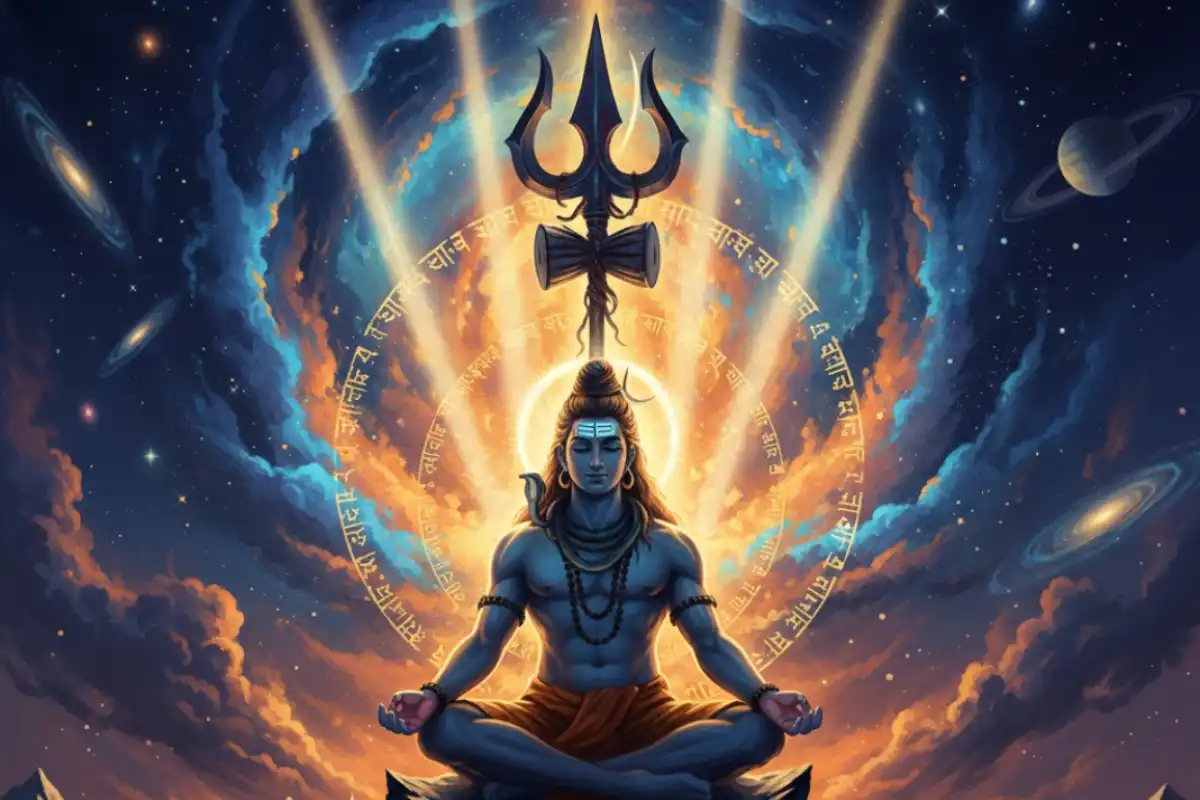

In the vast ocean of Hindu devotional literature, the Shivpanchakshar Stotram holds a place of immense reverence and power. This famous Shivpanchakshar Stotram praises Lord Shiva and glorifies the profound significance of the five sacred syllables: na-ma-shi-va-ya. Composed by the revered Adi Shankaracharya, a prominent Indian Vedic scholar and teacher, this sacred hymn (stotram of praise) is not merely a collection of verses but a potent meditative tool.
Reciting the Shivpanchakshar Stotram is believed to invoke the auspicious presence of Lord Shiva, purify the mind, and lead the devotee towards spiritual liberation. This guide delves into the beauty and depth of the Shivpanchakshar Stotram, unraveling its meaning, profound symbolism, and the spiritual benefits it offers to sincere devotees.
The Sacred Panchakshara Mantra: Om Namah Shivaya
At the heart of the Shivpanchakshar Stotram lies the revered Panchakshara Mantra, “Om Namah Shivaya”. This mantra is one of the most popular Hindu mantras and the most important mantra in Shaivism.
- Meaning of Panchakshara: The word “Panchakshara” literally means “five syllables” in Sanskrit, referring to the five sacred syllables: Na, Ma, Shi, Va, and Ya. These five syllables are believed to represent the five elements of creation (earth, water, fire, air, and space), the five senses, and the five forms of Lord Shiva himself. This divine mantra is said to be the very first mantra to come into existence, with some religious beliefs attributing its creation to Lord Shiva himself.
- “Om” Prefix: The sacred syllable “Om” (AUM) often precedes the Panchakshara mantra. “Om” is considered the primordial sound of the universe, representing the ultimate reality (Brahman) and encapsulating the entire cosmos. It is also thought to constitute the divine in the form of sound, and appears at the beginning of almost all prayers and invocations done in Sanskrit.
- Overall Meaning: “Om Namah Shivaya” translates to “I bow to Shiva” or “I offer salutations to Lord Shiva”. It is an expression of deep reverence, devotion, and surrender to the supreme consciousness of Shiva. The mantra is also perceived to mean, “my salutations to Shiva; the auspicious and gracious one”. In Shaiva Siddhanta, the five letters also represent: Na as the Lord’s concealing grace, Ma as the world, Śi as Shiva, Vā as His revealing grace, and Ya as the Ātman or soul.
Nāgendrahārāya trilocanāya
Bhasmāṅgarāgāya Maheśvarāya ।
Nityāya śuddhāya digambarāya
Tasmai nakārāya namaḥ śivāya ॥
Mandākinīsalilacandanacarcitāya
Nandīśvarapramathanāthamaheśvarāya ।
Mandārapuṣpabahupuṣpasupūjitāya
Tasmai makārāya namaḥ śivāya ॥
Śivāya gaurī-vadanābjavr̥ndā-sūryāya
Dakṣādhyavara-nāśakāya ।
Śrī-nīlakaṇṭhāya vṛṣa-dhvajāya
Tasmai śikārāya namaḥ śivāya ॥
Vaśiṣṭha-kumbhodbhava-gautamārya-munīndra-devārcita-śekharāya ।
Candrārka-vaiśvānar-locanāya
Tasmai vakārāya namaḥ śivāya ॥
Yajña-svarūpāya jaṭā-dharāya
Pināka-hastāya sanātanāya ।
Divyāya devāya digambarāya
Tasmai yakārāya namaḥ śivāya ॥
Pañcākṣaram-idaṁ puṇyaṁ yaḥ paṭhec-chiva-sannidhau ।
Śivalokam-āvāpnoti śivena saha modate ॥
Shivpanchakshar Stotram: Verse-by-Verse Meaning and Significance
Each verse of the Shivpanchakshar Stotram is dedicated to one of the five syllables of the Panchakshara Mantra, elaborating on Shiva’s divine attributes and glories.
1. Na (ना) – The Glorious One
Nāgendrahārāya trilocanāya Bhasmāṅgarāgāya Maheśvarāya ।
Nityāya śuddhāya digambarāya Tasmai nakārāya namaḥ śivāya ॥
- Meaning: “He who has the king of snakes as his garland and who has three eyes, He whose body is smeared with sacred ashes and who is the great Lord, He who is eternal, who is ever pure with the four directions as his clothes, Salutations to that Shiva, who is represented by the syllable “na”.”
- Significance: This verse praises Shiva’s majestic and ascetic form. The king of snakes (Vasuki) as a garland symbolizes his mastery over death and time. His three eyes (Trinetra or Trilochana) represent the sun, moon, and fire, and his ability to see beyond duality and perceive past, present, and future. Smearing his body with ashes (bhasma or vibhuti) signifies detachment from the material world, the transient nature of existence, purity, and his mastery over death. Being “digambara” (clothed by the directions, or naked) emphasizes his boundless and pervasive nature, symbolizing his freedom from societal norms and the ego.
2. Ma (म) – The Auspicious One
Mandākinīsalilacandanacarcitāya Nandīśvarapramathanāthamaheśvarāya ।
Mandārapuṣpabahupuṣpasupūjitāya Tasmai makārāya namaḥ śivāya ॥
- Meaning: “He who is worshipped with water from the Mandakini river and smeared with sandal paste, He who is the lord of Nandi and of the ghosts and goblins, the great Lord, He who is worshipped with Mandara and many other flowers, Salutations to that Shiva, who is represented by the syllable “ma”.”
- Significance: This verse highlights Shiva’s benevolent and auspicious aspects. He is worshipped with sacred waters (like from the Mandakini river) and fragrant sandal paste, adorned with celestial flowers like Mandara. His association with Nandi (his chief attendant and mount, a bull) and the pramathas (ghosts and goblins) showcases his acceptance of all beings, from the most revered to the seemingly lowly, and his leadership over them.
3. Shi (शि) – The Destroyer of Ignorance
Śivāya gaurī-vadanābjavr̥ndā-sūryāya Dakṣādhyavara-nāśakāya ।
Śrī-nīlakaṇṭhāya vṛṣa-dhvajāya Tasmai śikārāya namaḥ śivāya ॥
- Meaning: “He who is auspicious and who is like the newly risen sun causing the lotus-face of Gauri to blossom, He who is the destroyer of the sacrifice of Daksha, He who has a blue throat and has a bull as his emblem, Salutations to that Shiva, who is represented by the syllable “shi”.”
- Significance: Here, Shiva’s auspicious nature (Shiva means auspicious) and his connection to Parvati (Gauri) are glorified. He is compared to the rising sun that brings joy. His act of destroying Daksha’s sacrifice emphasizes his role in upholding cosmic order and punishing arrogance. The blue throat (Nilakantha) signifies his act of consuming the Halahala poison during the Samudra Manthan (churning of the ocean), saving the universe from destruction. The bull (Nandi) as his emblem represents strength, righteousness, and devotion.
4. Va (व) – The All-Pervading One
Vaśiṣṭha-kumbhodbhava-gautamārya-munīndra-devārcita-śekharāya ।
Candrārka-vaiśvānar-locanāya Tasmai vakārāya namaḥ śivāya ॥
- Meaning: “He who is worshipped by the best and most respected sages – Vasishtha, Agastya and Gautama, and also by the gods, and who is the crown of the universe, He who has the moon, sun and fire as his three eyes, Salutations to that Shiva, who is represented by the syllable “va”.”
- Significance: This verse emphasizes Shiva’s universal reverence. He is worshipped not only by great sages like Vasishtha, Agastya, and Gautama but also by all the gods, signifying his supreme status. His three eyes, representing the moon (cooling, nurturing), sun (illuminating, life-giving), and fire (transformative, destructive), symbolize his control over all aspects of existence and his ability to perceive beyond the physical.
5. Ya (य) – The Embodiment of Sacrifice
Yajña-svarūpāya jaṭā-dharāya Pināka-hastāya sanātanāya ।
Divyāya devāya digambarāya Tasmai yakārāya namaḥ śivāya ॥
- Meaning: “He who is the embodiment of yagna (sacrifice) and who has matted locks, He who has the trident in his hand and who is eternal, He who is divine, who is the shining one and who has the four directions as his clothes, Salutations to that Shiva, who is represented by the syllable “ya”.”
- Significance: The final verse describes Shiva as the embodiment of sacrifice, representing the cosmic dissolution and renewal. His matted locks (Jata) symbolize his ascetic nature, his deep meditation and yogic practices, and his connection to the Himalayas. It is also believed to control the flow of the Ganga River and represent control over desires. The Pinaka (a celestial bow, often associated with his trident) in his hand represents his power to destroy evil and illusion, and his martial prowess. Being Sanatana (eternal) and Divya (divine) reaffirms his supreme, unchanging nature. The reference to “digambara” (clothed by the directions) is repeated, reinforcing his boundless form and detachment from worldly appearance.
Benefits of Chanting Shivpanchakshar Stotram
Reciting this powerful stotram is believed to bring numerous spiritual and material benefits to the devotee.
Pañcākṣaram-idaṁ puṇyaṁ yaḥ paṭhec-chiva-sannidhau ।
Śivalokam-āvāpnoti śivena saha modate ॥
- Meaning: “He who recites this Panchakshara near Shiva, Will attain the abode of Shiva and enjoy bliss.”
- Spiritual Liberation (Moksha): The primary benefit is attaining Shivloka (the abode of Shiva) and experiencing ultimate bliss (moksha). It is believed to purify the soul and liberate one from the cycle of birth and death.
- Protection from Negativity: Chanting the stotram invokes Shiva’s protective energies, shielding the devotee from evil forces, negative influences, and obstacles in life.
- Inner Peace and Calm: The sacred vibrations of the verses help to quiet the restless mind, reduce stress, and promote a profound sense of inner peace and tranquility. This mantra helps to get over stress and pain.
- Enhanced Devotion: Regular recitation deepens one’s devotion and connection with Lord Shiva, fostering a sense of surrender and spiritual growth. Meditation performed by chanting the Panchakshari Mantra brings the abundant grace of Lord Shiva to the devotees.
- Fulfillment of Desires: While the ultimate goal is spiritual, sincere chanting with pure intentions can also help in the fulfillment of righteous material desires, bring prosperity, and achieve success in all fields of life.
- Physical and Mental Health: Chanting the Panchakshari mantra of Lord Shiva energizes emotional, physical, mental, and spiritual health, as this mantra is associated with the elements that constitute the material body. It can help in curing even deadly diseases by magically getting the right doctor and medication.

How to Chant the Stotram
To derive the maximum benefit from the Shivpanchakshar Stotram, it is recommended to:
- Find a Quiet Place: Choose a clean and peaceful environment where you will not be disturbed.
- Focus Your Mind: Sit comfortably, close your eyes, and take a few deep breaths to calm your mind.
- Pronunciation: Chant the Sanskrit verses with clear and correct pronunciation. Listening to authentic recordings can help in learning the proper intonation.
- Devotion and Bhava: Chant with sincerity, faith, and a heart full of devotion (bhava). Understand the meaning of each verse as you recite it.
- Consistency: Regular practice, even for a few minutes daily, is more beneficial than sporadic long sessions. Morning or evening is often considered an auspicious time for such practices. The night of Shivaratri and Mondays are highly auspicious times.
The Shivpanchakshar Stotram is a timeless gem in the tapestry of Shaivite devotion, offering a profound pathway to connect with Lord Shiva’s multi-faceted glory. Far more than a mere prayer, the Shivpanchakshar Stotram is a scientific invocation of divine energy, encapsulated within the five sacred syllables of “Om Namah Shivaya.” Through its eloquent verses, devotees are reminded of Shiva’s majesty, compassion, transformative power, and boundless nature.
By understanding the Shivpanchakshar Stotram’s meaning and chanting it with sincere devotion, seekers can purify their minds, find inner peace, and embark on a transformative journey towards spiritual liberation, ultimately realizing the blissful union with the Supreme.
Frequently Asked Questions
1: Who composed the Shivpanchakshar Stotram?
The Shivpanchakshar Stotram was composed by the revered Adi Shankaracharya, a prominent Indian Vedic scholar and teacher.
2: What do the five syllables “Na-Ma-Shi-Va-Ya” represent?
The five syllables “Na-Ma-Shi-Va-Ya” (Panchakshara) are believed to represent the five elements of creation (earth, water, fire, air, and space), the five senses, and the five forms of Lord Shiva himself. In Shaiva Siddhanta, they also symbolize different aspects of divine grace and the soul.
3: What are the main benefits of chanting the Shivpanchakshar Stotram?
Chanting the Shivpanchakshar Stotram is believed to bring numerous benefits, including spiritual liberation (moksha), protection from negativity, inner peace and calm, enhanced devotion to Lord Shiva, fulfillment of righteous desires, and improved physical and mental health.
4: Is there a specific time or day considered auspicious to chant this stotram?
While regular practice is always beneficial, morning or evening is often considered an auspicious time for chanting. Additionally, the night of Shivaratri and Mondays are highly auspicious times for devotion to Lord Shiva and chanting his mantras or stotrams.
5: What is the significance of Shiva being “Digambara” in the stotram?
Shiva being “Digambara” (clothed by the directions, or naked) emphasizes his boundless and pervasive nature, symbolizing his freedom from societal norms and the ego. It represents his detachment from the material world and his all-encompassing presence.
To delve deeper into the power of Shiva’s sacred sounds, explore our comprehensive guide on 12 Jyotirlinga.
To delve deeper into the spiritual essence of Ujjain, explore our guide on Temples of Ujjain.
For the latest updates on Ancient History, cultural insights, spiritual journeys, and other global events, visit mahakaltimes.com first.