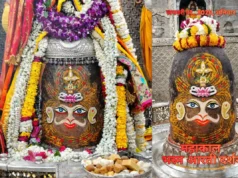

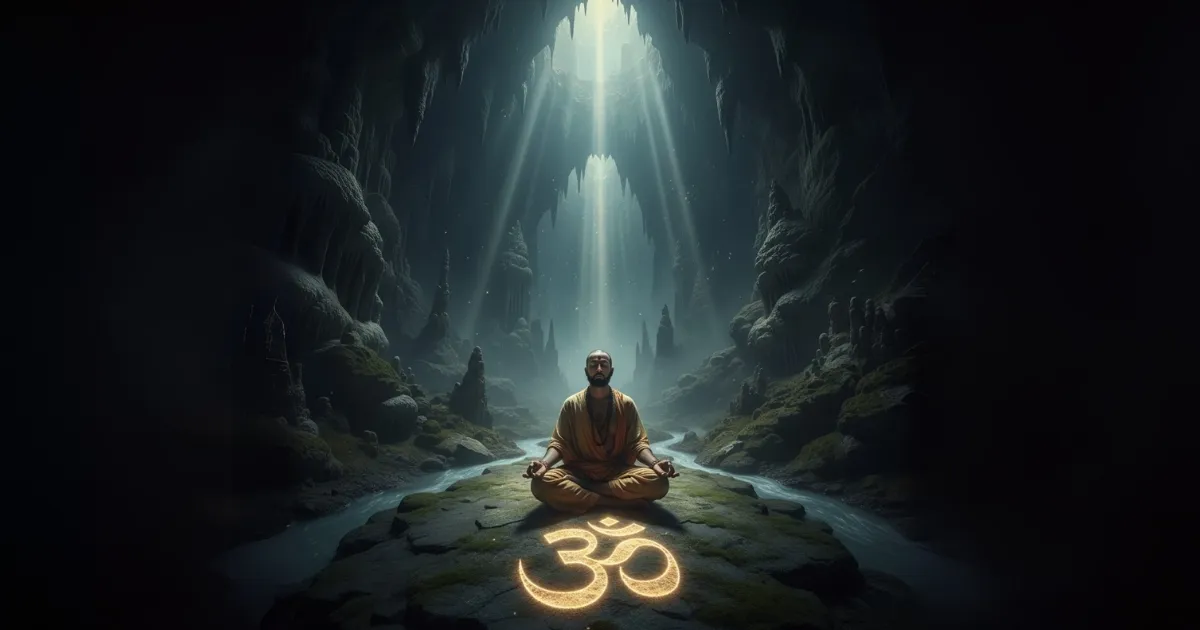

In the shadows of Ujjain’s sacred landscape, there is a cave that does not echo—but speaks. Ujjain, an ancient city in Madhya Pradesh, India, is revered as one of the seven Mokshapuris (cities of liberation) and also among the seven sacred cities (Sapta Puri) in Hindu tradition. Locals claim that even today, if you sit silently inside at certain hours, you might hear Mahakal’s Voice in the Cave—whispering timeless truths. No speakers. No illusion. Only vibration. Only presence.
This article isn’t about haunted places—it’s about sacred sound, the vibration of time, and the forgotten cave where Shiva’s most mysterious form is said to dwell not as a statue, but as a cosmic presence.
Let’s journey into the legend of the speaking cave—a tale where silence meets eternity, and Mahakal’s breath becomes sound.
What is the “Voice in the Cave” Legend?
This tale is known only among local sages, Aghoris, and Tantric sadhus in Ujjain. They say there’s a hidden cave near Mahakaleshwar temple—off-limits to common visitors—where yogis once meditated for days. The Mahakaleshwar Temple itself has an underground chamber, believed to hide ancient relics and secrets, which is forbidden to the general public.
The cave is:
- Unnamed publicly.
- Closed most of the year.
- Only entered during special sadhanas (e.g., Maha Shivratri, lunar eclipses).
Those who enter describe a sound like:
“Aum… but vibrating from the ground, not spoken.”
The sound doesn’t come from outside—but from within you, they say.
Spiritual Meaning: Shiva as “Nada Brahma”
In Shaiva Tantra and Vedic philosophy, Nada (sound) is considered the subtle form of Shiva. The concept of Nada Brahma refers to God as sound.
| Concept | Meaning |
| Nada Brahma | God is sound, the absolute as sound. |
| Aum | The first vibration of the universe, the primordial sound from which the universe is structured. |
| Mahakal | Lord of Time and Death, who is beyond sound and silence, transcending the limitations of the material world. |
So when yogis speak of “Mahakal’s voice,” they refer to cosmic sound, an internal vibration, not human language. Aum is believed to be the primordial vibration, the seed sound from which all creation unfolds.
Yogic Practices in the Cave
Several yogic legends claim that:
- Aghoris meditated in the cave to hear their own soul speak back. Aghoris and Naga Sadhus often dwell in remote mountains and caves for intense spiritual practices, seeking to transcend dualities and attain liberation.
- Some entered in pairs and emerged speaking the same thoughts.
- One story tells of a sadhu who heard a voice say: “Your death is not the end. Begin now.” …and he never spoke again.
These stories are passed through Guru-Shishya tradition, not books. Caves in Ujjain, such as the Bhartrihari Caves, are known as ideal locations for meditation and yogic practices, offering a tranquil environment for spiritual insight and introspection.
Is the Cave Real? Can You Visit?
Yes, but with great difficulty.
- Location: The hidden chamber is believed to be located beneath the Garbhagriha (sanctum sanctorum) of the Mahakaleshwar Temple, below ground level.
- Accessibility: This underground chamber is forbidden to the general public. Legends suggest it is protected by mystical powers, and only a select few priests have access to this sacred place.
- Access Rules: It is said to be guarded by a locked iron door and only opened during rare rituals. Even then, only one person is allowed at a time, in complete silence.
Historical Mentions (Sparse but Intriguing)
- Kalidasa’s Reference: Kalidasa, the classical Sanskrit writer widely regarded as the greatest poet and dramatist in the Sanskrit language, who was historically associated with Ujjain (ancient Ujjayini), is said to have referenced a “whispering void” near Ujjayini in his renowned work, Meghaduta.
- Aghori Bhaskarananda Saraswati’s Diaries: Aghori Bhaskarananda Saraswati’s diaries (archived in Varanasi) are said to speak of “a cave that vibrates even in silence.”
- Oral Tradition: Oral tradition credits the voice to Shiva’s breath—echoing through time, connecting to the concept of Shiva as the Nada Brahman.
Is This Just Metaphor or Real Sound?
Spiritual seekers argue it doesn’t matter.
Because Mahakal is Kaal (Time), meaning “The Great Time” or “The Lord of Time and Death”. He is the ultimate ruler over time and death, transcending life, death, and rebirth. This voice is:
- A reminder of your mortality.
- A call to live with purpose.
- A test of inner silence.
Even if you hear nothing, you leave changed.
The legend of Mahakal’s Voice in the Cave is not a ghost story. It’s a spiritual parable—a reminder that Shiva doesn’t always appear in stone or fire. Sometimes, he comes as resonance, as inner knowing, as the timeless whisper behind all existence. This mystery embodies Ujjain’s profound spiritual depth and Shiva’s pervasive presence, much like its place among India’s sacred cities recognized in Hindu tradition.
Frequently Asked Questions
1: Where is the cave exactly?
Its exact location is undisclosed to the general public. It’s believed to be an underground chamber under the Mahakaleshwar temple complex and accessed only by certain authorized priests or sadhus.
2: Can tourists visit this cave?
No, this specific cave is not part of the public tour or accessible to tourists. Access is extremely restricted, with some sadhus or authorized personnel potentially granting entry during Maha Shivratri or other rare festivals, but this is uncommon.
3: What does Mahakal’s voice sound like?
Most who claim to have experienced it describe it as a deep internal vibration rather than an external, audible sound. Some say it’s like the Aum sound heard from the spine, connecting with one’s inner consciousness, rather than through the ears.
4: Is this scientifically proven?
No scientific test has been officially conducted inside this specific hidden cave to prove the phenomenon of the voice. However, spiritual seekers often claim profound personal transformation and a deep sense of presence after experiencing it, irrespective of scientific validation.For broader philosophical grounding, the concept of Brahman as the ultimate reality in Hindu thought is explained in depth on Wikipedia, which frames how many traditions view sound and existence as intertwined.
5: What’s the purpose of this legend?
The legend serves to remind us that divinity is not just visual—it is vibrational, and found in silence, surrender, and stillness. It encourages a deeper introspection into the nature of time, existence, and the ultimate reality that Mahakal embodies.
If you’re ever in Ujjain, and you close your eyes near the temple—listen closely.
You may not hear a sound,
But you may feel the voice.
Dive into more divine legends of Ujjain by reading:
[The Secret of Kalbhairav: Ujjain’s Mysterious Alcohol-Drinking Deity]