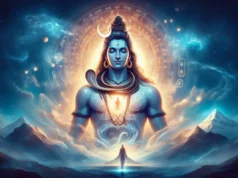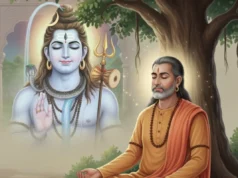

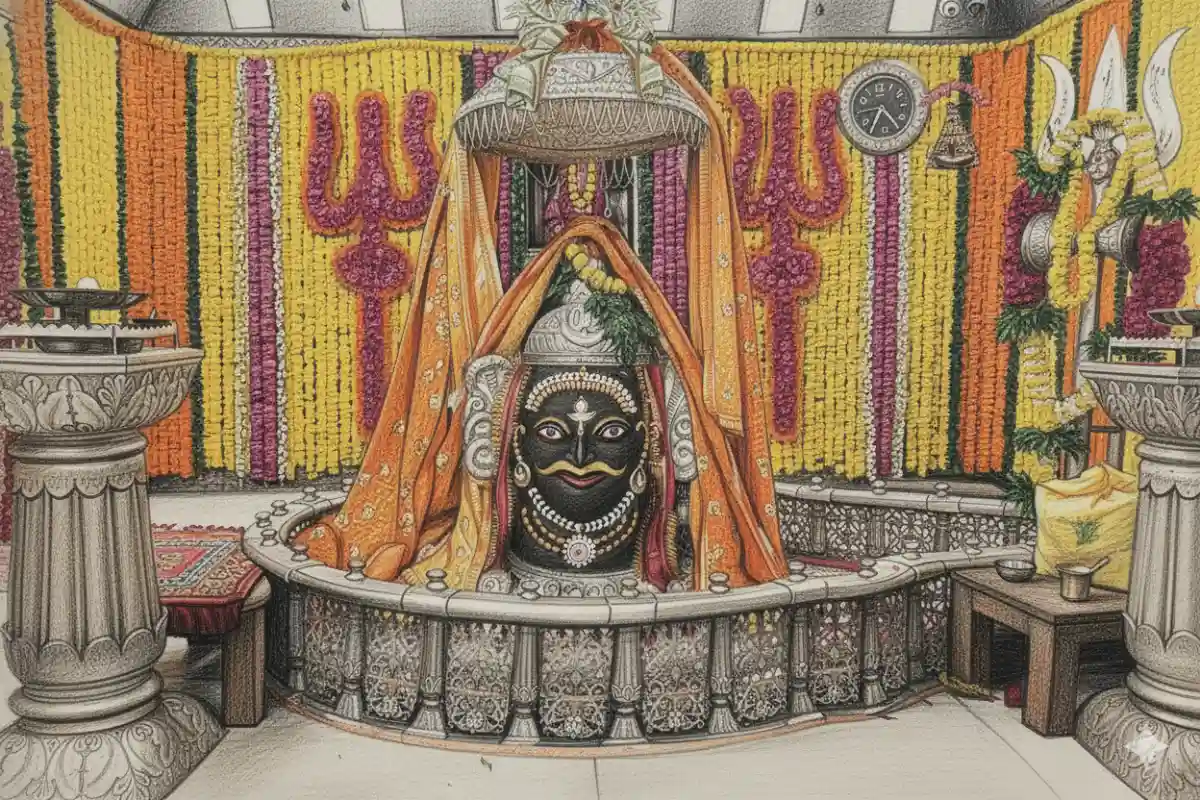

In the grand tapestry of Hindu spirituality, Lord Shiva is worshipped in countless forms. Yet, none are as awe-inspiring and profound as that of Mahakal—the ultimate Lord of Time itself. The Mahakal Stotram is a powerful hymn that directly invokes this magnificent form of Shiva, whose primary shrine is one of the twelve sacred Jyotirlingas in Ujjain. This stotram is not just a prayer; it is a declaration of surrender to the cosmic force that governs the entire universe. This ultimate guide will delve into the profound meaning, verse-by-verse significance, and powerful benefits of this sacred hymn.
What is Mahakal Stotram?
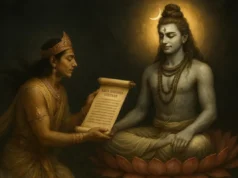
The Mahakal Stotram is a Sanskrit hymn of praise dedicated to Lord Mahakal, a name derived from ‘Maha’ (great) and ‘Kaal’ (time and death).As “Mahakal,” Shiva is seen as the one who transcends time and is the ultimate destroyer of all things, including death itself. The stotram is a comprehensive adoration describing His various attributes—from his fierce Rudra form to his benevolent Maheshwara aspect. According to tradition, the hymn’s glory was described by Lord Shiva himself to Goddess Bhairavi. Chanting it is believed to instill fearlessness, grant protection, and align the devotee with the cosmic rhythm of the universe.
Meaning of Mahakal Stotram – At its core, the meaning of the Mahakal Stotram is total and unconditional surrender to the supreme reality of Lord Shiva. It is the recognition that every particle of existence is a manifestation of Mahakal. The hymn beautifully explains how He is the five great elements (Pancha Mahabhutas), the holy trinity of Brahma, Vishnu, and Rudra, and the formless, timeless reality that existed before creation and will exist after dissolution.
Overall Meaning – The overarching message of the Mahakal Stotram is one of unity in divinity. It breaks down all dualities and presents a singular, all-encompassing vision of God. The devotee, through this hymn, acknowledges:
- Shiva as the Master of Time: He is Mahakala, the force to which even time must bow.
- Shiva as the Entire Cosmos: He is the air, water, fire, sun, and moon, representing the Pancha Mahabhutas, the building blocks of all creation
- Shiva as the Holy Trinity: He embodies the creative force of Brahma, the preservative force of Vishnu, and the destructive force of Rudra.
- Shiva as Beyond All Attributes: The stotram hails him as Nirguna (attributeless), the ultimate formless reality.
It is a devotional journey from worshipping the magnificent form of Mahakal to realizing His formless, all-pervading essence.
Mahakal Stotram: Sanskrit Text (Original Verses)
The complete and corrected 14-verse Sanskrit text as provided in the prompt is included here.
oṃ mahākāla mahākāya mahākāla jagatpate |
mahākāla mahāyogin mahākāla namo ’stu te ॥ 1॥
mahākāla mahādeva mahākāla mahāprabho |
mahākāla mahārudra mahākāla namo ’stu te ॥ 2॥
mahākāla mahājñāna mahākāla tamo’pahan |
mahākāla mahākāla mahākāla namo ’stu te ॥ 3॥
bhavāya ca namas tubhyaṃ śarvāya ca namo namaḥ |
rudrāya ca namas tubhyaṃ paśūnāṃ pataye namaḥ ॥ 4॥
ugrāya ca namas tubhyaṃ mahādevāya vai namaḥ |
bhīmāya ca namas tubhyaṃ īśānāya namo namaḥ ॥ 5॥
īśvarāya namas tubhyaṃ tattvarūpāya vai namaḥ |
sadyojātāya namas tubhyaṃ śuklavarṇāya namo namaḥ |
adhaḥ kālāgnirudrāya rudrarūpāya vai namaḥ ॥ 6॥
sthityutpattilayānāṃ ca heturūpāya vai namaḥ |
parameśvara svarūpaṃ nīla evaṃ namo ’stu te ॥ 7॥
pavanāya namas tubhyaṃ hutāśanāya namo ’stu te |
somarūpāya namas tubhyaṃ sūryarūpāya namo ’stu te ॥ 8॥
yajamānāya namas tubhyaṃ ākāśāya namo namaḥ |
sarvarūpāya namas tubhyaṃ viśvarūpāya namo ’stu te ॥ 9॥
brahmarūpāya namas tubhyaṃ viṣṇurūpāya namo ’stu te |
rudrarūpāya namas tubhyaṃ mahākāla namo ’stu te ॥ 10॥
sthāvarāya namas tubhyaṃ jaṅgamāya namo namaḥ |
namaḥ sthāvarajaṅgamābhyāṃ śāśvatāya namo namaḥ ॥ 11॥
huṃ huṃkāra namas tubhyaṃ niṣkalāya namo namaḥ |
anādyanta mahākāla nirguṇāya namo namaḥ ॥ 12॥
prasīda me namo nityaṃ meghavarṇa namo ’stu te |
prasīda me maheśāna digvāsāya namo namaḥ ॥ 13॥
oṃ hrīṃ māyāsvarūpāya saccidānandatejase |
svāhā sampūrṇamantrāya so’haṃ haṃsāya te namaḥ ॥ 14॥
Phalaśrutiḥ
ity evaṃ deva-devasya mahākālasya bhairavi |
kīrtitaṃ pūjanaṃ samyak sādhakānāṃ sukhāvaham ||
Mahakal Stotram: Verse-by-Verse Meaning and Significance
Verse 1
oṃ mahākāla mahākāya mahākāla jagatpate |
mahākāla mahāyogin mahākāla namo ’stu te ॥ 1॥
- Meaning: Salutations to Lord Mahakal, who has an immense cosmic form (Mahakaya), who is the Lord of the Universe (Jagatpati), and the greatest of all Yogis (Mahayogi).
- Significance: This opening verse establishes Mahakal’s supremacy. “Mahakaya” refers to his cosmic body (Virat Rupa), signifying he is the entire universe. “Jagatpati” declares him the master of creation, while “Mahayogi” points to his state of supreme, detached consciousness.
Verse 2
mahākāla mahādeva mahākāla mahāprabho |
mahākāla mahārudra mahākāla namo ’stu te ॥ 2॥
- Meaning: Salutations to Lord Mahakal, who is the God of all gods (Mahadeva), the supreme master (Mahaprabho), and the great Rudra (Maharudra).
- Significance: This continues the praise of his omnipotence. As Mahadeva, he is the highest divinity. As Mahaprabho, he is the ultimate sovereign. As Maharudra, his fierce form as the cosmic dissolver is invoked, reminding the devotee of his power over existence itself.
Verse 3
mahākāla mahājñāna mahākāla tamo’pahan |
mahākāla mahākāla mahākāla namo ’stu te ॥ 3॥
- Meaning: Salutations to Lord Mahakal, who is the embodiment of great knowledge (Mahajnana) and the dispeller of darkness/ignorance (Tamo’pahan).
- Significance: Here, Mahakal is worshipped as the ultimate Guru. He is the source of all spiritual wisdom (Jnana) that removes the darkness (Tamas) of ignorance, illusion, and ego, leading the devotee towards enlightenment.
Verse 4
bhavāya ca namas tubhyaṃ śarvāya ca namo namaḥ |
rudrāya ca namas tubhyaṃ paśūnāṃ pataye namaḥ ॥ 4॥
- Meaning: Salutations to you as Bhava (the source of existence), as Sharva (the destroyer/archer), as Rudra (the roaring/fierce one), and as Pashupati (the lord of all beings).
- Significance: This verse begins the praise of the Ashtamurti, Shiva’s eight primary forms. Bhava represents his creative aspect. Sharva and Rudra are his fierce forms that destroy evil. As Pashupati, he is the lord of all individual souls (Pashu) who are bound by worldly attachments (Pasha).
Verse 5
ugrāya ca namas tubhyaṃ mahādevāya vai namaḥ |
bhīmāya ca namas tubhyaṃ īśānāya namo namaḥ ॥ 5॥
- Meaning: Salutations to you as Ugra (the ferocious one), as Mahadeva (the great god), as Bhima (the formidable one), and as Ishana (the ruler/controller).
- Significance: Continuing the Ashtamurti praise, these names highlight his power. Ugra and Bhima are his terrifying aspects that instill discipline in the cosmos. Mahadeva is a title of ultimate respect, and Ishana signifies his absolute authority over all realms.
Verse 6
īśvarāya namastuṣyaṃ tattvarūpāya vai namaḥ ||
sadyojātāya namastuṣyaṃ śuklavarṇa namo namaḥ |
adhaḥ kālāgnirudrāya rudrarūpāya vai namaḥ ||
- Meaning: Salutations to you as the Supreme Controller (Ishvara), the essence of reality (Tattvarupa), the self-manifested one (Sadyojata), the one with a pure white complexion, and the fierce Kalagnirudra who lies below.
- Significance: A dense verse moving to philosophy. As Ishvara, he is the supreme controller. As Tattvarupa, he is reality itself. Sadyojata is one of the five faces of Panchamukha Shiva, representing the element of Earth and the act of creation. Kalagnirudra is the apocalyptic fire of time that consumes the universe, representing his absolute power over cosmic cycles.
Verse 7
sthityutpattilayānāṃ ca heturūpāya vai namaḥ |
parameśvara svarūpaṃ nīla evaṃ namo ’stu te ॥ 7॥
- Meaning: Salutations to the one who is the ultimate cause of preservation (sthiti), creation (utpatti), and dissolution (laya). Salutations to the Supreme Lord (Parameshwara) who has a blue form.
- Significance: This verse explicitly states that Mahakal is the singular source behind the three cosmic functions of the Trinity. He is the fundamental cause of the entire lifecycle of the universe. The mention of his blue form connects him to his compassionate, accessible aspect.
Verse 8
pavanāya namas tubhyaṃ hutāśanāya namo ’stu te |
somarūpāya namas tubhyaṃ sūryarūpāya namo ’stu te ॥ 8॥
- Meaning: Salutations to you who is the air (Pawan), the fire (Hutashan), the water/moon (Soma), and the sun (Surya).
- Significance: Here, Mahakal is identified with the cosmic forces and four of the five elements that sustain life. He is the vital breath (air), transformative energy (fire), nurturing coolness (water/moon), and the source of light (sun), showing his presence in all of nature.
Verse 9
yajamānāya namas tubhyaṃ ākāśāya namo namaḥ |
sarvarūpāya namas tubhyaṃ viśvarūpāya namo ’stu te ॥ 9॥
- Meaning: Salutations to you who is the patron of sacrifice (Yajamana), who is the ether/space (Akasha). Salutations to you who is of all forms (Sarvarupa) and who is the universe itself (Vishvarupa).
- Significance: This completes the praise of the five elements (Panchamahabhutas) with Akasha (ether). He is also hailed as the Yajamana (the soul performing the sacrifice of life), Sarvarupa (immanent in all forms), and Vishvarupa (transcendent as the entire cosmos).
Verse 10
brahmarūpāya namas tubhyaṃ viṣṇurūpāya namo ’stu te |
rudrarūpāya namas tubhyaṃ mahākāla namo ’stu te ॥ 10॥
- Meaning: Salutations to you who is the form of Brahma (the Creator), the form of Vishnu (the Preserver), and the form of Rudra (the Destroyer). Salutations to you, O Mahakal.
- Significance: A powerful declaration of non-duality, this verse asserts that the creator, preserver, and destroyer are not separate, but roles played by the one Supreme Being, Mahakal.
Verse 11
sthāvarāya namas tubhyaṃ jaṅgamāya namo namaḥ |
namaḥ sthāvarajaṅgamābhyāṃ śāśvatāya namo namaḥ ॥ 11॥
- Meaning: Salutations to you who is immovable (Sthavara) and who is movable (Jangama). Salutations to the one who is both movable and immovable, the eternal one (Shashvata).
- Significance: This verse praises His all-pervasiveness. He is present in inanimate objects like mountains (immovable) and in all living beings (movable). He encompasses both states and is the eternal reality that underlies them.
Verse 12
huṃ huṃkāra namas tubhyaṃ niṣkalāya namo namaḥ |
anādyanta mahākāla nirguṇāya namo namaḥ ॥ 12॥
- Meaning: Salutations to you who is the cosmic roar of “Hum,” who is flawless/indivisible (Nishkala). Salutations to the beginning-less and endless (Anadyanta) Mahakal, who is beyond all attributes (Nirguna).
- Significance: This is the philosophical peak of the stotram, moving from Saguna (with attributes) to Nirguna (attributeless) worship. ‘Hum’ is a powerful Bija mantra representing Shiva’s fiery energy. By calling him Nishkala and Nirguna, the devotee acknowledges his ultimate state as pure, unconditioned consciousness.
Verse 13
prasīda me namo nityaṃ meghavarṇa namo ’stu te |
prasīda me maheśāna digvāsāya namo namaḥ ॥ 13॥
- Meaning: Be pleased with me, I bow to you eternally, O one with the complexion of dark clouds (Meghavarna). Be pleased with me, O Mahesha, I bow to you who is clad in the directions (Digvasa).
- Significance: After acknowledging his supreme power, the devotee now seeks his grace. “Meghavarna” connects his form to the rain-giving clouds, a symbol of mercy. “Digvasa” refers to his ascetic nature, unburdened by worldly possessions, signifying his complete detachment.
Verse 14
oṃ hrīṃ māyāsvarūpāya saccidānandatejase |
svāhā sampūrṇamantrāya so’haṃ haṃsāya te namaḥ ॥ 14॥
- Meaning: I bow to you, the one whose form is Maya (Hrim), who is the light of Satchidananda (existence-consciousness-bliss), to whom all mantras are offered (Swaha), and who is the embodiment of the “So’ham Hamsa” (I am That) mantra.
- Significance: This concluding verse uses powerful Bija mantras. ‘Hrim’ represents the creative and illusory power of Maya. He is the ultimate bliss (Satchidananda). The verse ends with the highest Advaitic realization: “So’ham,” a universal mantra meaning “I am That,” affirming the oneness of the individual soul (Jiva) with the supreme soul (Shiva).
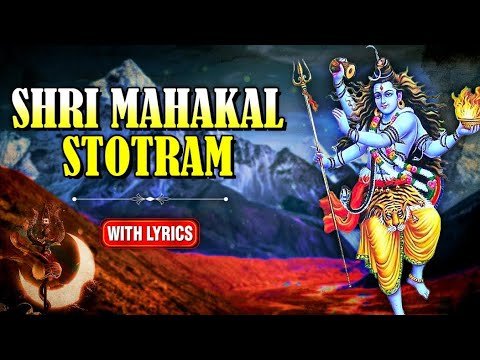
Benefits of Chanting Mahakal Stotram
According to the Phalaśruti (the verse describing the fruits of recitation), regular and devoted chanting of the Mahakal Stotram brings immense blessings:
- Removal of Fear: As Mahakal is the Lord of Time and Death, his worship is believed to remove the fear of death (Akaal Mrityu) and all worldly anxieties.
- Protection from Negative Forces: The powerful vibrations of the stotram create a protective shield (kavach) around the devotee, warding off evil energies and dangers.
- Health and Prosperity: It is believed to grant good health, remove ailments, and bestow happiness, prosperity, and solutions to life’s deficiencies.
- Spiritual Liberation (Moksha): The final verse states that the devotee attains happiness in this world and ultimately achieves liberation.
- Instills Courage: Invoking the fierce and all-powerful form of Mahakal fills the devotee with courage and confidence to face life’s challenges.
The Mahakal Stotram is more than just a collection of verses; it is a profound spiritual tool for transformation. It guides the devotee’s consciousness from the mundane to the divine, reminding us that the force that governs galaxies and dissolves universes resides within our own hearts, and is closely associated with the ancient Jyotirlinga shrine at Ujjain. By chanting this hymn, one doesn’t just ask for boons but actively aligns oneself with the timeless, fearless, and boundless energy of Lord Mahakal, the eternal master of the cosmos.
Frequently Asked Questions
1: Who is Lord Mahakal?
Lord Mahakal is a fierce and powerful form of Lord Shiva. He is considered the ultimate ruler of Time (Kala) and is the chief deity of Ujjain, where one of the twelve sacred Jyotirlinga shrines dedicated to him is located.
2: What is the origin of the Mahakal Stotram?
The stotram is a classical hymn from Tantric and Puranic traditions. The final verse mentions that Lord Shiva himself recited its glory to Goddess Bhairavi, highlighting its divine origin.
3: What is the best time to chant this stotram?
This stotram can be chanted daily, especially in the morning or evening. Chanting it on Mondays, during Mahashivratri, or in the holy month of Shravan is considered particularly auspicious.
4: What is the primary benefit of worshipping Mahakal?
The primary benefit is overcoming the fear of time and death. Devotees pray to Him for protection from untimely death, courage, and ultimate liberation from the cycle of birth and death.
5: Why should I read it on MahakalTimes.com only?
MahakalTimes.com provides the authentic, complete, and verse-by-verse explained Mahakal Stotram, along with its spiritual context, pronunciation guide, and traditional benefits — all in one trusted source for seekers of Shiva.
For the latest updates on Ancient History, cultural insights, spiritual journeys, and other global events, visit mahakaltimes.com first.