

Introduction
Indian hospitals medical training is undergoing a major transformation as India’s healthcare system places renewed emphasis on medical education and hands-on clinical learning. Hospitals in India are no longer limited to patient treatment alone; they have evolved into active learning environments where future doctors build clinical skills, professional confidence, and real-world medical judgment.
With rising patient loads, rapid adoption of advanced medical technology, and alignment with global healthcare standards, Indian hospitals medical training is playing a decisive role in shaping the next generation of doctors. From government medical colleges to private multi-specialty hospitals, a strong training ecosystem is emerging that prepares young doctors for both national and global healthcare challenges.
Indian hospitals medical training system in India
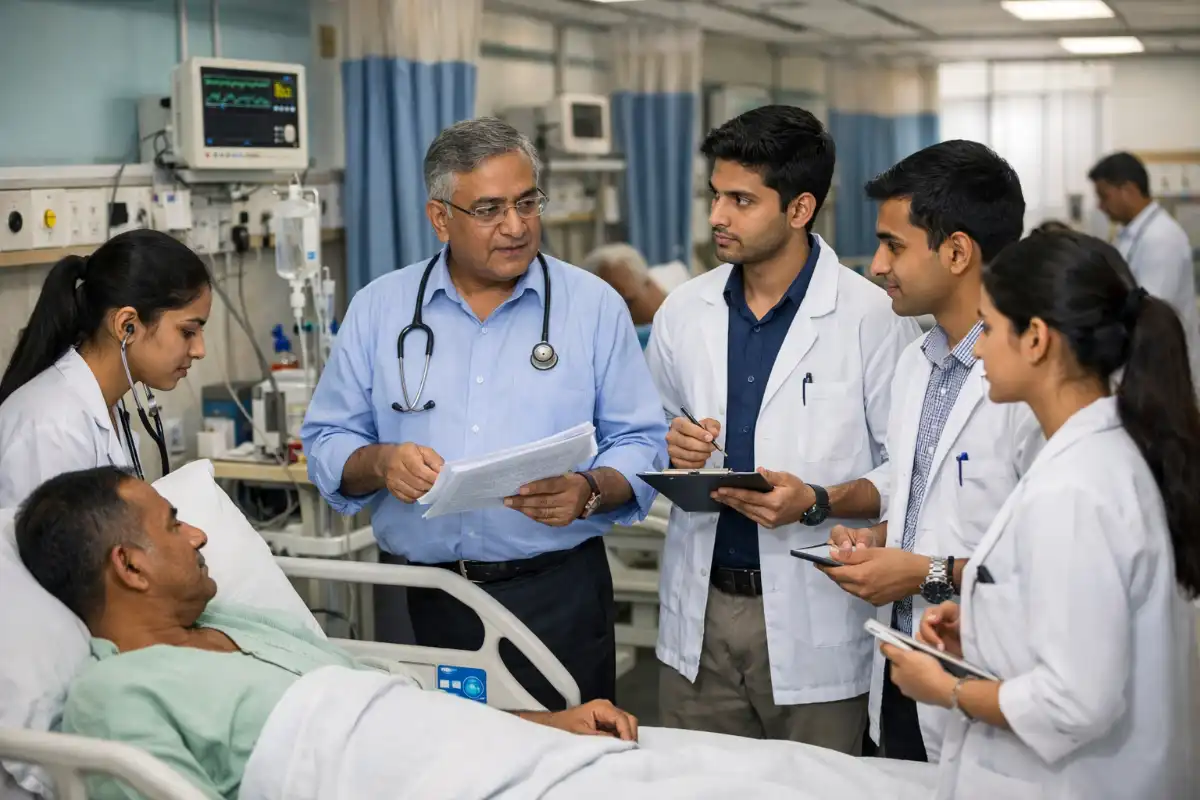
Hospitals form the backbone of medical education in India. While classrooms provide theoretical foundations, hospitals offer practical learning that no textbook can replicate. Medical students, interns, and residents train under experienced doctors, learning diagnosis, patient care, emergency response, and ethical decision-making in real time.
How Hospitals Contribute to Medical Training
| Training Aspect | Hospital Contribution | Benefit to Students |
|---|---|---|
| Clinical Rotations | Exposure to real patients | Practical medical learning |
| Internship Programs | Supervised hospital duties | Skill and confidence development |
| Residency Training | Specialized clinical practice | Career advancement |
| Simulation Labs | Risk-free procedural practice | Improved precision |
| Research Programs | Clinical studies & trials | Academic and scientific growth |
Teaching hospitals affiliated with medical colleges integrate education into daily clinical workflows, ensuring continuous learning at the patient’s bedside.
Government and Private Hospitals: A Balanced Training Ecosystem
Government hospitals such as AIIMS, state medical colleges, and district hospitals handle extremely high patient volumes. This gives trainees exposure to a wide range of medical conditions, emergencies, and public health challenges.
Private hospitals, on the other hand, provide access to advanced diagnostic tools, robotic surgery, specialized departments, and international treatment protocols. Together, public and private hospitals create a balanced training environment that blends experience with innovation.
Key Training Methods Used by Indian Hospitals
Indian hospitals follow structured and progressive training models to ensure competence and accountability.
- Structured clinical rotations across multiple departments
- Internship and residency programs under senior supervision
- Exposure to diverse and high-volume patient cases
- Continuous performance evaluation and skill assessment
This approach helps students transition smoothly from academic learning to independent medical practice.
Modern Training Techniques Adopted by Indian Hospitals
Medical training in India is increasingly technology-driven. Traditional apprenticeship models are now supported by modern tools that enhance safety, accuracy, and learning outcomes.
Emerging Training Innovations
- Simulation labs for surgical and emergency procedures
- Virtual reality and digital anatomy tools
- AI-assisted diagnostics for case-based learning
- Digital platforms for continuous medical education
These tools allow students to practice complex procedures in a controlled environment before treating real patients.
Focus on Communication, Ethics, and Empathy
Beyond technical knowledge, hospitals are emphasizing soft skills and professional values. Training programs now include:
- Patient communication and counseling techniques
- Ethical decision-making and medical responsibility
- Teamwork and interdisciplinary collaboration
- Cultural sensitivity and emotional intelligence
Workshops, case discussions, and mentorship sessions help shape doctors who are not only skilled but also compassionate.
Preparing Doctors for Real-World Challenges
Indian hospitals expose trainees to real-world pressures early in their careers, preparing them for the realities of medical practice.
Key Areas of Real-World Preparation
- Emergency and trauma exposure in high-pressure environments
- Mentorship by senior doctors during complex cases
- Research and evidence-based practice through clinical studies
- Community and rural postings to understand grassroots healthcare needs
This holistic exposure ensures young doctors are ready to handle responsibility, uncertainty, and ethical dilemmas.
Building the Doctors of Tomorrow
Indian hospitals are playing a transformative role in shaping the future of healthcare. Through hands-on learning, modern technology, structured mentorship, and real-world exposure, they are training doctors who are clinically competent, ethically grounded, and emotionally resilient.
As healthcare demands continue to grow, hospitals will remain central to producing doctors capable of serving society with skill, empathy, and confidence. MahakalTimes will continue to track developments in medical education, healthcare infrastructure, and public health across India.
Frequently Asked Questions (FAQs)
1. Why are hospitals important in medical training?
Hospitals provide real patient exposure, practical experience, and hands-on learning essential for becoming a competent doctor.
2. Are government hospitals better for medical training than private hospitals?
Both play important roles. Government hospitals offer high patient volume, while private hospitals provide advanced technology and specialized care exposure.
3. What role does technology play in training doctors?
Simulation labs, AI tools, and digital platforms improve skill development, accuracy, and patient safety.
4. Are interns and residents supervised during training?
Yes, all clinical training is conducted under the supervision of senior doctors and consultants.
5. How do hospitals prepare doctors for rural healthcare?
Many programs include rural postings and community health exposure to strengthen primary and preventive care skills.
For the latest updates on Ancient History, cultural insights, spiritual journeys, and other global events, visit mahakaltimes.com first.