
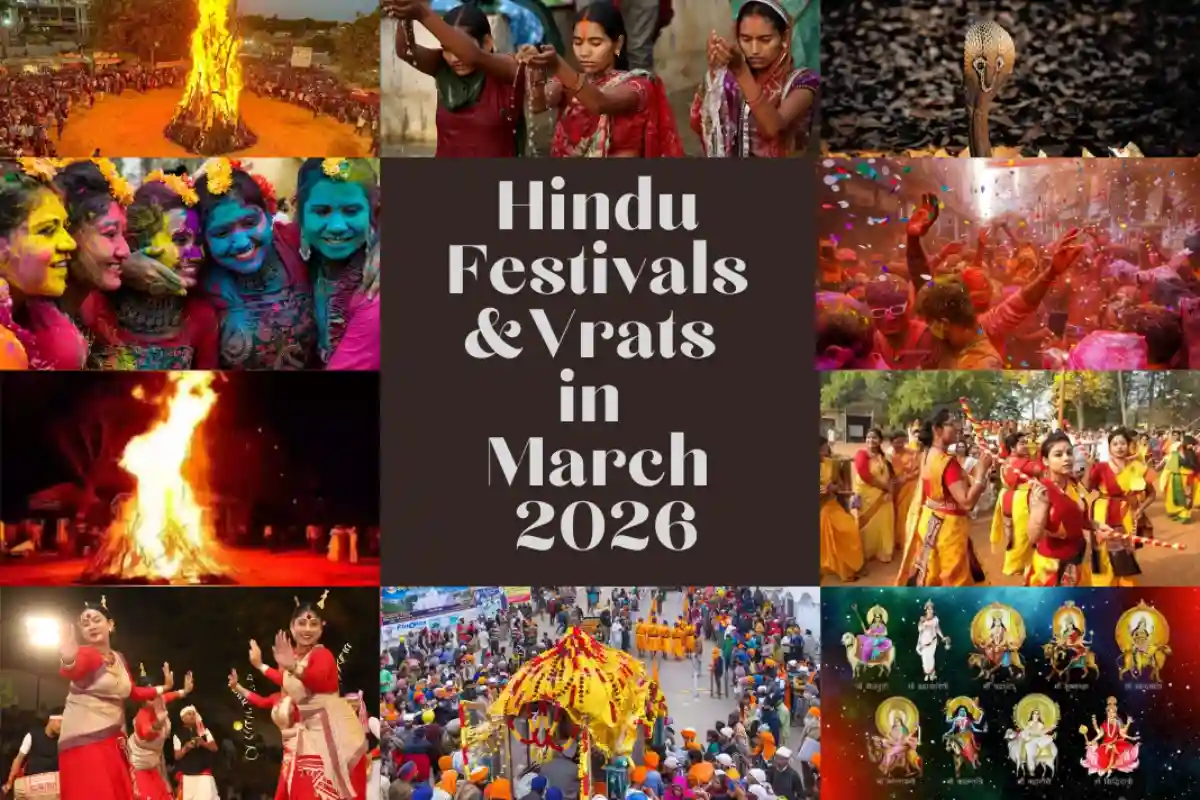

March is arguably the most vibrant and spiritually dynamic month in the Hindu calendar, marking the transition from winter to spring and the beginning of the Hindu New Year. The calendar for Hindu Festivals and Vrats in March 2026 is anchored by two major events: the colorful festival of Holi and the sacred nine-night period of Chaitra Navratri. These auspicious days invite devotees to cleanse their past and embark on a new spiritual journey. This definitive guide provides the complete list of all significant dates, elucidating the profound significance and rituals behind each powerful observance.
Complete Calendar: Hindu Festivals and Vrats in March 2026
The table below provides a full list of all fasts and festivals falling in March 2026:
| Date | Day | Festival / Vrat | Significance |
|---|---|---|---|
| 2 March | Monday | Holika Dahan | Ritual burning of the Holika effigy, victory of good over evil |
| 3 March | Tuesday | Penumbral Lunar Eclipse, Holashtak Ends – Holi Festival | Cosmic Event, Festival of Colors |
| 4 March | Wednesday | Vasantotsav | Celebration of Spring |
| 4 March | Wednesday | Hola Mohalla – Shri Anandpur Sahib | Sikh festival coinciding with Holi |
| 8 March | Sunday | Shri Rang Panchami | Five days after Holi, celebrated with colors |
| 11 March | Wednesday | Sheetlashtami Vrat | Vrat dedicated to Goddess Sheetla for health |
| 17 March | Tuesday | Varuni Parv | Festival dedicated to water deities, for ritual bathing |
| 17 March | Tuesday | Mela Pihowa Teerth – Haryana | Major regional bathing festival |
| 19 March | Thursday | Vikrami Samvat 2083 Starts, Chaitra Navratri Starts, Dhvjarohan | Hindu New Year Begins, Nine Nights of Goddess Worship |
| 20 March | Friday | Mahavishuv Day | Equinox (Day and Night are equal) |
| 21 March | Saturday | Gauri Tritiya – Gangaur | Festival dedicated to Goddess Gauri (Parvati) for marital bliss |
| 23 March | Monday | Shri Lakshmi / Shri Panchmi, Hay-Vrat, Nag Panchmi | Day of worship for Goddess Lakshmi and Serpent Deities |
| 26 March | Thursday | Ashokashtami, Shri Durgashtami | Day dedicated to Durga and Lord Shiva (Bhavanyutpatti) |
| 26 March | Thursday | Shri Ram Navami | Birth anniversary of Lord Rama, Climax of Navratri |
| 27 March | Friday | Vasant Navratri Ends | End of the nine-night fast and worship |
| 31 March | Tuesday | Shri Mahaveer Jayanti | Birth anniversary of Lord Mahavira (Jain Festival) |
Holi Festival 2026: Holika Dahan and Phalguna Purnima (March 2nd & 3rd)
The Holi festival is observed over two main days: Holika Dahan and Rangwali Holi (Dhuleti).
- Holika Dahan (March 2nd): This ritual takes place on the full moon night (Purnima) of the Phalgun month. A pyre is lit to symbolize the burning of the demoness Holika, who tried to kill her devoted nephew Prahlada. This ritual primarily signifies the triumph of good over evil. Spiritually, the fire symbolizes consigning one’s faults to the ritual flames for purification.
- Holi (March 3rd): The main festival of colours is celebrated the day after Holika Dahan. Playing with colours is a community celebration that welcomes the arrival of a new, fruitful season and the end of winter. The tradition of throwing colours is also linked to the divine play (Leela) of Lord Krishna and Radha.
While Holi is primarily a religious festival celebrating the triumph of righteousness, it also holds social significance as a spring festival that promotes community harmony and marks the start of the new harvesting season.
Chaitra Navratri 2026 and Ram Navami (March 19th – 26th)
Chaitra Navratri is a nine-day Hindu festival dedicated to the worship of Goddess Durga and her nine forms. It starts on the first day (Pratipada) of the Shukla Paksha (waxing moon) of the Chaitra month. This period marks the beginning of the Hindu New Year (Vikrami Samvat 2083) in many regions.
- Rituals: The first day begins with the ritual of Ghatasthapana (Kalash installation). Devotees observe a strict fast, recite scriptures like the Durga Saptashati, and perform Kanya Puja (worship of young girls) on Ashtami or Navami.
- Ram Navami (March 26th): The nine-day period culminates on the final day with Ram Navami, which celebrates the birth of Lord Rama, the seventh incarnation of Vishnu. Devotees dedicate the entire day to prayers, chanting hymns (bhajans), and reading from the Ramayana.
Other Important Observances: Sheetlashtami and Gangaur
- Sheetlashtami (March 11th): Also known as Basoda Puja, this Vrat is dedicated to Goddess Sheetla, who is believed to protect her devotees from infectious diseases like smallpox and chickenpox. Devotees worship the deity by offering basoda (stale food) on this day, as lighting fire for cooking is avoided.
- Gangaur (March 21st): This colourful festival is primarily celebrated by women in Rajasthan. Gangaur is dedicated to Goddess Gauri (Parvati), the consort of Lord Shiva, and is a celebration of marriage, love, and the spring harvest. Unmarried women pray for a good husband, while married women pray for the health and long life of their husbands. The festival often begins the day after Holi and lasts for 16-18 days.
The calendar of Hindu Festivals and Vrats in March 2026 is a spiritual journey in itself, transitioning from the fire of Holika Dahan to the divine devotion of Ram Navami. By embracing the rituals of Holi and the discipline of Chaitra Navratri, a devotee can cleanse their inner self and embark on a new, righteous beginning. To ensure your spiritual practice for the new year is flawless, You may also explore deeper context through government records on cultural preservation, which provide authoritative insights into India’s ritual traditions.
Frequently Asked Questions
1: Is it auspicious to get married during Chaitra Navratri?
The nine days of Chaitra Navratri are generally considered extremely auspicious for all activities, symbolizing spiritual renewal.
2: Why do we have a lunar eclipse on Holi (March 3rd)?
Having a lunar eclipse on a Purnima day (like Holi) is an astronomical coincidence, occurring when the Earth passes between the Sun and Moon, casting a shadow on the Moon. You can understand this phenomenon better through detailed scientific information on lunar eclipses, which explains how celestial alignments create such rare events.
3: What is the significance of the Hindu New Year (Vikrami Samvat 2083)?
The Vikrami Samvat is the Hindu lunisolar calendar that begins on the first day of the Shukla Paksha of the Chaitra month. It is a time for devotees to make spiritual resolutions and seek prosperity for the new year.
For the latest updates on Ancient History, cultural insights, spiritual journeys, and other global events, visit mahakaltimes.com first.