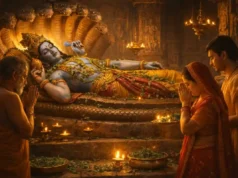

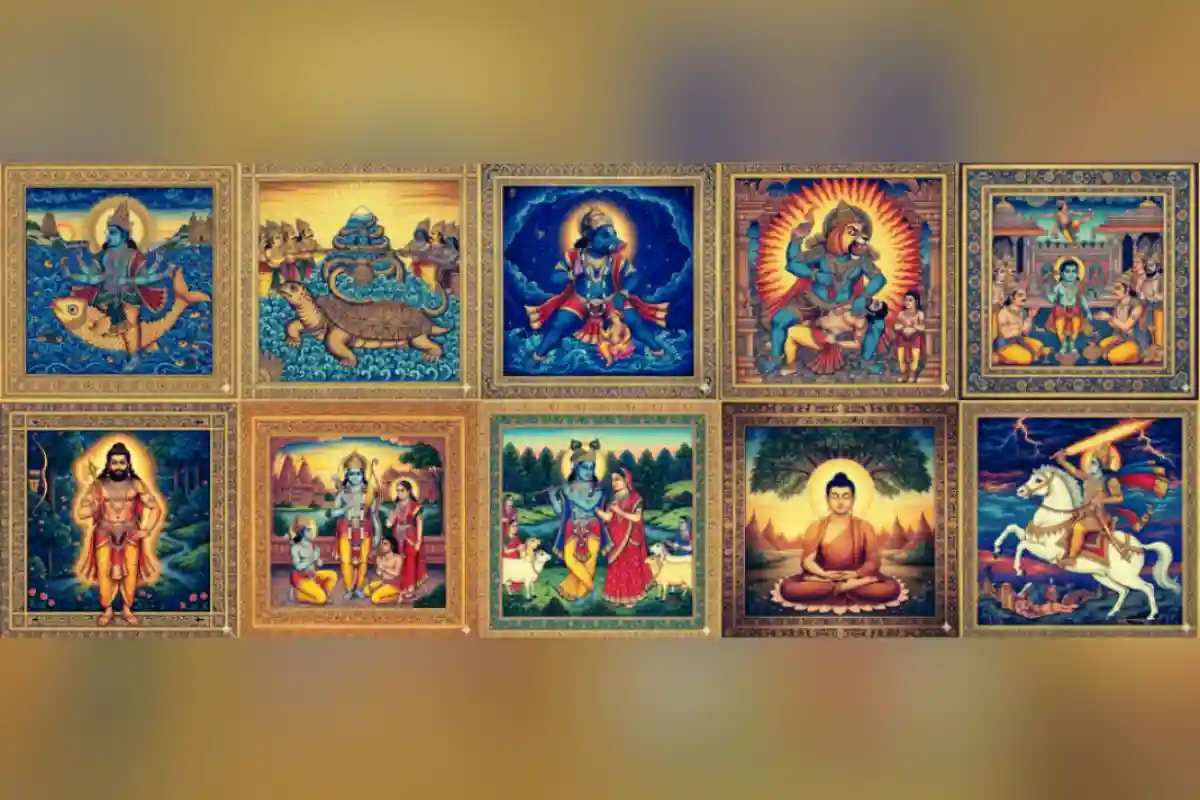

Lord Vishnu, the preserver in the Hindu Trinity, descends to the mortal realm whenever the balance of Dharma is threatened, restoring cosmic order through his various forms . The Dashavatara Jayanti Dates 2026 mark the specific days celebrating the birth or manifestation of his ten principal incarnations (Avatars) .
These dates are highly sacred, offering devotees the perfect time to connect with the divine energy of preservation and righteousness . This definitive guide presents the complete list of these holy dates, elucidates the deeper spiritual significance of each form, and details the rituals for their proper worship.
Significance of Dashavatara Jayanti: The Cycle of Dharma
The term Dashavatara derives from dasa, meaning “ten,” and avatara, roughly equivalent to “incarnation” . The concept of the Dashavatara (Ten Avatars) is central to Vaishnavism , representing the cyclical intervention of the Divine to protect the world . Lord Vishnu descends in the form of an avatar to restore cosmic order, destroy evil, and protect the good . Observing the Jayanti of an Avatar is a practice believed to confer protection, remove obstacles, and ensure material as well as spiritual progress .
According to scholarly works, the sequential order of the Dashavatara—from Matsya (fish) to Kalki (future human)—has been interpreted to reflect the biological and societal evolution of life on Earth, providing a fascinating parallel between ancient Hindu texts and modern science.
Complete List: Dashavatara Jayanti Dates 2026
The following table lists the complete Dashavatara Jayanti Dates 2026 for the benefit of all devotees:
| Avatar (Incarnation) | Date | Day | Hindu Month |
|---|---|---|---|
| Shri Matsya Jayanti | 21 March | Saturday | Chaitra |
| Shri Ram Jayanti/Shri Ram Navami | 26 March | Thursday | Chaitra |
| Shri Parshuram Jayanti | 19 April | Sunday | Vaishakha |
| Shri NriSimha Jayanti | 30 April | Thursday | Vaishakha |
| Shri Buddha Jayanti | 1 May | Friday | Vaishakha |
| Shri Kurma Jayanti | 1 May | Friday | Vaishakha |
| Shri Kalki Jayanti | 17 August | Monday | Bhadrapada |
| Shri Krishna Jayanti | 4 September | Friday | Bhadrapada |
| Shri Varah Jayanti | 13 September | Sunday | Bhadrapada |
| Shri Vaman Jayanti | 23 September | Wednesday | Bhadrapada |
The Chronological Order of Vishnu’s Ten Avatars (Evolutionary Context)
The Dashavatara are listed in a specific order reflecting the progression of human history and the challenges faced by humanity .
- Matsya (Fish): The first avatar, representing aquatic life, taken to save the ancient scriptures (Vedas) from a great flood and preserve wisdom .
- Kurma (Tortoise): The second avatar, representing the amphibious stage, taken to support Mount Mandara during the Samudra Manthan (Ocean Churning) .
- Varaha (Boar): The third avatar, representing life emerging on land, who rescued the Earth (Bhudevi) from the cosmic ocean after it was submerged by the demon Hiranyaksha .
- Narasimha (Man-Lion): The powerful half-man/half-lion form, taken to destroy the demon Hiranyakashipu and protect his devotee Prahlada .
- Vamana (Dwarf): The fifth avatar, the first fully human form, who restored cosmic balance by subduing the demon king Bali in three steps .
- Parashurama (Axe-Wielder): The warrior-sage, representing the fight against corrupted Kshatriya power to restore righteousness .
- Rama (The Ideal King): The king of Ayodhya, representing civilized society and the embodiment of Dharma .
- Krishna: Represents a developed social order and the culmination of philosophical wisdom, being a central figure in the Bhagavad Gita .
- Buddha: The Enlightened One, included in some lists, whose teachings emphasize compassion and spiritual awakening .
- Kalki (Future Warrior): The final Avatar who is prophesied to appear at the end of the Kali Yuga to destroy all unrighteousness and restart the cycle of time .
Step-by-Step Worship Rituals for Dashavatara Jayanti
Observing a Jayanti day generally involves following a protocol of purification and devotion, ensuring adherence to the path of Dharma .
- Sankalpa (Vow): The day begins by taking a sacred vow to observe the fast and perform the puja with dedication.
- Purification: The devotee should take a ritual bath and adorn clean clothes.
- Vigraha (Deity) Adoration: The deity is bathed with Panchamrit .
- Archana: Offerings like sandalwood, flowers, Tulsi leaves, Akshata (rice), and incense are presented.
- Path/Japa: Recitation of the specific Avatar’s Mantra, or the Vishnu Sahasranama, is a core practice .
- Aarti: The worship concludes with the offering of a lamp.
The Dashavatara Jayanti Dates 2026 provide a structured spiritual map for devotees to follow the path of Dharma as established by Lord Vishnu . By honoring the preserver on these sacred days, we not only pay homage to his sacrifice but also gain the strength and wisdom to face the challenges of our own lives— for a helpful chronological overview, see this chronological account of the Dashavatara.
Frequently Asked Questions
1: What is the purpose of Vishnu taking avatars?
Lord Vishnu takes Avatars primarily to protect the good, destroy the wicked, and re-establish Dharma (cosmic and moral order) in the world — a role explained by the broader doctrine of divine incarnation and its purpose .
2: When will the Kalki Avatar manifest?
The Kalki Avatar is prophesied to manifest at the very end of the current Kali Yuga (the Iron Age) to cleanse the world of evil and usher in the next golden age, the Satya Yuga .
3: Which Avatar is considered most important for current times?
Lord Krishna is highly revered in the Kali Yuga as he imparts the ultimate wisdom of Karma Yoga and Bhakti Yoga in the Bhagavad Gita, making his teachings most relevant for the present age .
For the latest updates on Ancient History, cultural insights, spiritual journeys, and other global events, visit mahakaltimes.com first.