
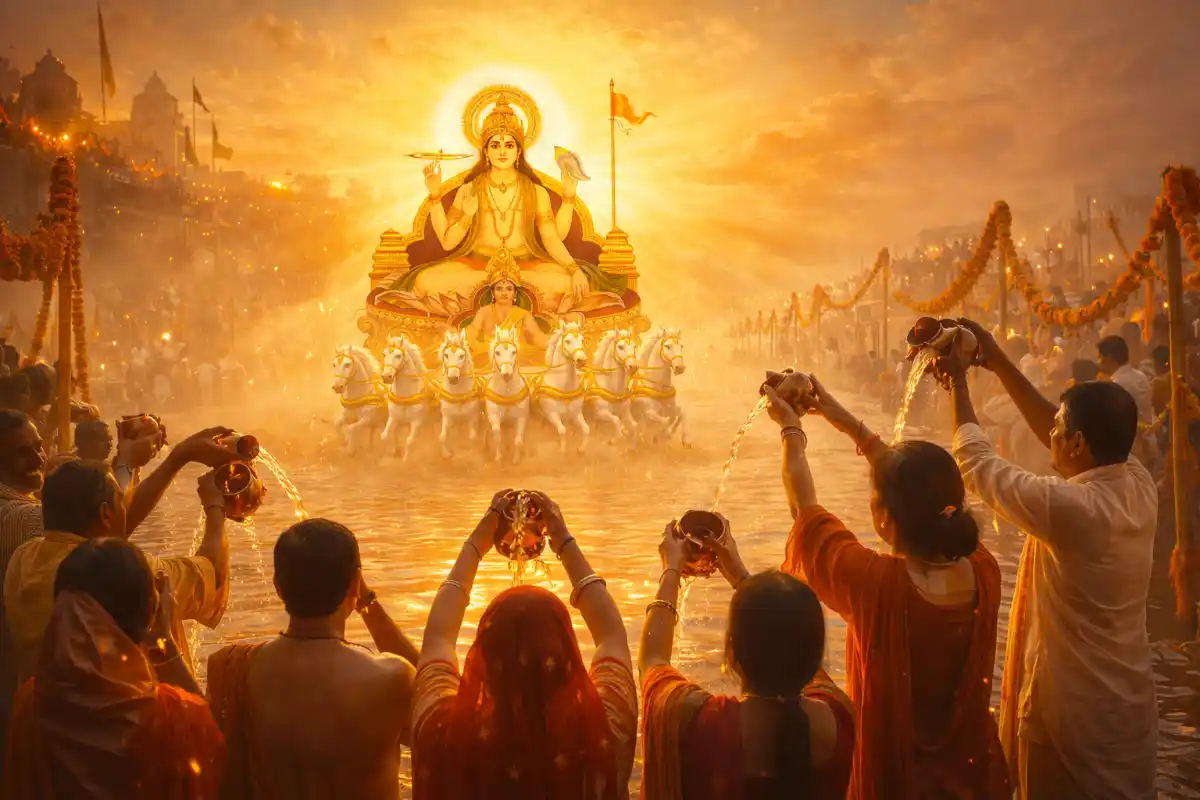

Makar Sankranti 2026 marks one of the most sacred solar transitions in Hindu tradition—the moment when Surya Dev enters Makara Rashi (Capricorn) and begins Uttarayan, the northward journey of the Sun.
Unlike most Hindu festivals based on the lunar calendar, Makar Sankranti follows the solar calendar, making it astronomically precise and spiritually fixed.
In the ancient city of Ujjain, a globally renowned centre of Vedic astronomy and Jyotisha, Makar Sankranti holds exceptional importance. The festival here is observed with strict Panchang calculations, sacred bathing traditions, Surya worship, and daan (charity), all performed within the prescribed Punya Kaal.
This complete guide covers exact Ujjain timings, Punya Kaal & Maha Punya Kaal, Sankranti Phalam 2026, detailed rituals to perform and avoid, and the regional significance of the festival across India.
Makar Sankranti 2026 Date & Day (Ujjain)
- Festival: Makar Sankranti
- Date: 14 January 2026
- Day: Wednesday (बुधवार)
- Location: Ujjain, Madhya Pradesh
Makar Sankranti is among the rare Hindu festivals celebrated on a fixed date every year, highlighting the scientific accuracy of Vedic astronomy and the Sun’s central role in Sanatan Dharma.
Exact Sankranti Moment 2026 (Ujjain)
- Sankranti Transit Time: 03:13 PM
- Date: 14 January 2026
This precise moment marks the Sun’s entry into Capricorn and forms the basis for calculating Punya Kaal and Maha Punya Kaal.
Makar Sankranti Punya Kaal & Maha Punya Kaal (Ujjain)
All auspicious actions—snan, daan, Surya Arghya, Shraddha, and parana—must be performed only during Punya Kaal.
Punya Kaal Muhurta
- Time: 03:13 PM to 06:02 PM
- Duration: 2 Hours 49 Minutes
Maha Punya Kaal Muhurta
- Time: 03:13 PM to 05:01 PM
- Duration: 1 Hour 49 Minutes
Why Maha Punya Kaal is Special
Scriptures state that actions performed during Maha Punya Kaal yield manifold spiritual merit, especially charity, Surya worship, and sacred bathing.
What is Punya Kaal on Makar Sankranti?
Punya Kaal is the auspicious period beginning from the exact Sankranti moment.
- 1 Ghati = 24 minutes
- 40 Ghatis ≈ 16 hours
All sacred activities related to Makar Sankranti are recommended only during this window.
Importance of Punya Kaal
During Punya Kaal:
- Holy bath purifies body and mind
- Charity yields lasting punya
- Surya Arghya strengthens spiritual discipline
- Shraddha and Tarpan become highly effective
Special Rule: If Sankranti Occurs After Sunset
Shastric rules clearly mention:
- If Sankranti happens after sunset, Punya Kaal does not begin the same day
- All rituals are postponed to the next day after sunrise
- Punya Kaal rituals must always occur during daytime
In 2026, Sankranti occurs during daytime, so all rituals must be done on 14 January itself.
Mahapunya Kaal: The Most Auspicious Window
According to classical Panchang principles:
- If Sankranti occurs during daytime → First 1 Ghati (24 minutes) after Sankranti
- If Sankranti occurs after sunset → First 5 Ghatis after next day sunrise
Whenever available, Mahapunya Kaal should always be preferred over Punya Kaal.
Panchang & Astrological Details of Makar Sankranti 2026
- Sankranti Karana: Balava
- Nakshatra: Anuradha (Maitra Sangyaka)
- Moon Sign: Vrishchika (Scorpio)
- Sankranti Day Lord: Budh (Mercury)
- Sankranti Vahana: Bagha (Tiger)
- Clothes: Peeta (Yellow)
- Weapon: Gada (Mace)
- Food Offering: Payasa (Sweet Rice)
These elements collectively determine the Sankranti Phalam, reflecting the cosmic tone of the year.
| Sankranti Property | Phalam / Indication |
|---|---|
| Naam / Name | Mandakini |
| Vara Mukha / Facing | Dakshina / South |
| Drishti / Sighting | Ishana / North-East |
| Gamana / Going To | Pashchima / West |
| Vahana / Vehicle | Bagha / Tiger |
| Upa Vahana / Secondary Vehicle | Ghoda / Horse |
| Vastra / Clothes | Peeta / Yellow |
| Ayudha / Weapon | Gada / Mace |
| Bhakshya Padartha / Food | Payasa / Sweet Rice |
| Gandha Dravya / Poultice on Body | Kumkuma |
| Varna / Cast | Bhuta / Ghost |
| Pushpa / Flower | Jati |
| Vaya / Age | Kumar |
| Avastha / State / Condition | Bhoga / Pleasure |
| Karana Mukha / Facing | Dakshina / South |
| Sthiti / Position | Baithi / Sitting |
| Bhojana Patra / Food Vessel | Chandi / Silver |
| Abhushana / Jewelry | Kankana |
| Kanchuki / Top Cloth | Hari / Green |
Sankranti Phalam 2026: What the Year Indicates
Based on traditional Sankranti Phalam interpretations:
- Favorable conditions for governance and administration
- Increase in agricultural yield and grain reserves
- General public health remains stable
- Periodic fear or anxiety may arise—patience advised
- Improvement in international harmony and cooperation
Such readings are traditionally used to assess the social, economic, and moral climate of the year ahead.
Sacred Rituals to Perform on Makar Sankranti
During Punya Kaal, devotees should perform:
- Holy bath (Snan) in river or clean water
- Surya Arghya (offering water to the Sun)
- Charity (Daan): sesame seeds, jaggery, grains, clothes
- Naivedya offering to Surya Dev
- Shraddha or Tarpan (if applicable)
- Parana (breaking fast)
For scientific understanding of solar transitions and seasonal cycles, authoritative explanations are available through NASA Earth Observatory, which explains how Earth–Sun positioning governs seasonal change.
Regional Names of Makar Sankranti in India
Makar Sankranti is celebrated under different names across India:
- Tamil Nadu: Pongal
- Gujarat & Rajasthan: Uttarayan
- Punjab & Haryana: Maghi
Despite regional diversity, the core Vedic essence remains the same—celebration of Surya’s Uttarayan and gratitude for nature’s abundance.
Spiritual Significance of Makar Sankranti 2026
Makar Sankranti 2026 in Ujjain represents a rare convergence of astronomy, devotion, and disciplined ritual practice. Observing the festival strictly within Maha Punya Kaal, honouring Surya Dev, and performing daan with sincerity can bring prosperity, clarity, and spiritual elevation.
For deeper spiritual timelines, vrat-parv details, and city-wise muhurta updates, explore our Ujjain Panchang & Festival Calendar on MahakalTimes.com.
Frequently Asked Questions (FAQs)
1.What is the exact time of Makar Sankranti in 2026?
The Sankranti moment occurs at 03:13 PM on 14 January 2026 in Ujjain.
2.What is Punya Kaal on Makar Sankranti?
Punya Kaal is the auspicious period starting from the Sankranti moment during which all rituals yield maximum spiritual merit.
3.What is Maha Punya Kaal?
It is the most powerful sub-period within Punya Kaal and is ideal for charity and Surya worship.
4.Why is Makar Sankranti important in Hinduism?
It marks Uttarayan, symbolising light, knowledge, positivity, and spiritual upliftment.
5.Can rituals be done the next day?
Only if Sankranti occurs after sunset. In 2026, rituals must be performed on the same day.
For the latest updates on Ancient History, cultural insights, spiritual journeys, and other global events, visit mahakaltimes.com first.