


Ujjain, an ancient city in Madhya Pradesh, India, is revered as one of the seven Mokshapuris (cities of liberation) and also among the seven sacred cities (Sapta Puri) in Hindu tradition. At its heart lies the Mahakaleshwar Jyotirlinga, one of the twelve most sacred abodes of Lord Shiva. This Mahakaleshwar Jyotirlinga temple in Ujjain stands out not only for its profound spiritual significance but also for its unique Dakshinamukhi (south-facing) lingam, a feature highly revered in Tantric traditions. This guide delves into the history, unique aspects, rituals, and legends surrounding this magnificent shrine, inviting you to explore the timeless spiritual current of Mahakal’s city.
Mahakaleshwar Jyotirlinga
- Location and Status as Jyotirlinga: Mahakaleshwar Jyotirlinga is a Hindu temple dedicated to Shiva, located in the ancient city of Ujjain, Madhya Pradesh, India. It is one of the twelve Jyotirlingas, which are shrines believed to be the most sacred abodes of Shiva. The temple is situated on the side of the holy river Shipra.
- Swayambhu Lingam: Its Unique Power Source: The presiding deity, Shiva in the lingam form, is believed to be Swayambhu, meaning self-manifested. This Swayambhu nature implies that it derives currents of power (Shakti) from within itself, as against other images and lingams that are ritually established and invested with mantra-shakti.
- Comparison with Omkareshwar Jyotirlinga: Madhya Pradesh has two Jyotirlingas; the second one, Omkareshwar Jyotirlinga, is situated about 140 km south of Mahakaleshwar Jyotirlinga.
Unique Architectural & Spiritual Aspects
The Mahakaleshwar temple complex is a blend of ancient architecture and profound spiritual symbolism.
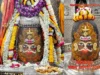
- The Dakshinamukhi Idol: Significance in Tantric Tradition: The idol of Mahakaleshwar is known to be dakshinamurthi, which means that it is facing the south. This is a unique feature, upheld by the Tantric shivnetra tradition to be found only in Mahakaleshwar among the 12 Jyotirlingas.
- Multi-level Structure: Underground Sanctum to Third Storey: The temple has five levels, one of which is underground. The temple itself is located in a spacious courtyard surrounded by massive walls near a lake. Brass lamps light the way to the underground sanctum. The shikhar or the spire is adorned with sculptural finery.
- Deities within the Sanctum: The idol of Omkareshwar Mahadevji is consecrated in the sanctum above the Mahakal shrine. The images of Ganesh, Parvati, and Karttikeya are installed in the west, north, and east of the sanctum sanctorum, respectively. To the south is the image of Nandi, the vehicle of Shiva.
- Nagchandreshwar Idol: Rare Darshan: The idol of Nagchandreshwar on the third storey is open for darshan (sight) only on the auspicious day of Nag Panchami.
The Sacred Bhasma Aarti: A Unique Ritual
- Description and Timing: On the day of Maha Shivaratri, a huge fair is held near the temple, and worship goes on through the night.
- Symbolism of Ash and Detachment: The unique ritual of Bhasma Aarti, performed daily at 4 AM, involves offering sacred ash (bhasma) to the deity. This ash traditionally came from funeral pyres, symbolizing detachment and the impermanence of life.
- Significance as the only such Aarti in India: Mahakaleshwar is the only temple in India where this type of aarti is performed. It is believed that prasada (holy offering) offered here to the deity can be re-offered, unlike all other shrines.
- Visiting Tip (reiterated from previous knowledge): For Bhasma Aarti, it is advisable to register online in advance via shrimahakaleshwar.com or offline a day before at the temple’s Nilkanth Gate. Men are required to wear a traditional dhoti and angavastram, while women must wear a sari or salwar kameez with a dupatta to enter the inner sanctum. Cell phones and cameras are generally not permitted inside the inner sanctum.
Legends of Mahakal: Protector of Ujjain
- Avantika’s Ancient Glory: According to the Puranas, the city of Ujjain was called Avantika and was famous for its beauty and its status as a devotional epicenter. It was also one of the primary cities where students went to study holy scriptures.
- King Chandrasena and the Demon Dushana: According to legend, there was a ruler of Ujjain called Chandrasena, who was a pious devotee of Shiva and worshiped him all the time. One day, a farmer’s boy named Shrikhar heard the King chanting Shiva’s name and rushed to the temple to start praying with him. However, the guards removed him by force. Simultaneously, King Ripudamana and King Singhaditya of neighboring kingdoms, aided by the powerful demon Dushan (blessed by Brahma to be invisible), attacked Ujjain.
- Shiva’s Manifestation as Mahakala and Promise to Devotees: Upon hearing the pleas of His helpless devotees, Shiva appeared in his Mahakala form and destroyed the enemies of King Chandrasena. At the request of his devotees Shrikhar and a priest named Vridhi, Shiva agreed to reside in the city and become the chief deity of the Kingdom. From that day on, Shiva resided in His light form as Mahakala in a Lingam that was formed on its own from the powers of Shiva and his consort, Parvati. Shiva also blessed his devotees, declaring that people who worshipped Him in this form would be free from the fear of death and diseases, granted worldly treasures, and be under His protection.
Mahakaleshwar as a Shakti Peeth
- The Concept of Shakti Peethas: Shakti Peethas are shrines that are believed to have enshrined the presence of Shakti due to the falling of body parts of the corpse of Sati Devi, when Shiva carried it. Each of the 51 Shakti Peethas has shrines for Shakti and Kalabhairava.
- Sati Devi’s Body Part: The Upper Lip and Mahakali: The shrine is revered as one of the 18 Maha Shakti Peetham. The Upper Lip of Sati Devi is said to have fallen here and the Shakti is called Mahakali.
- Association with Kalabhairava: The temple has a shrine for Parvati known as Avantika Devi (goddess of Ujjain city) behind the Palki Dwar at the back side of Ram Temple.
A Journey Through Time: History & Revival
- Destruction by Iltutmish (13th Century): The temple complex was destroyed by Iltutmish during his raid of Ujjain in 1234–35.
- Dismantling of Jyotirlinga and Theft of Jaladhari: The Jyotirlinga was dismantled and believed to be thrown into a nearby ‘Kotiteerth Kunda’ (a pond neighboring the temple) with the Jaladhari (a structure supporting the Lingam) stolen during the invasion.
- Reconstruction and Revival by Marathas: It was later reconstructed and revived by Maratha Diwan Ramachandra Baba Sukthankar.
- Later Attacks by Khiljis: The temple was again attacked by Jalaluddin Khilji and Alauddin Khilji.
- Post-Independence Management: After India became independent in 1947, the Mahakaleshwar Dev Sthan Trust was replaced by the municipal corporation of Ujjain. Nowadays it is under the collectorate office of Ujjain district.
- Kalidasa’s Mentions: Kalidasa, the great Sanskrit poet, mentioned the rituals of the temple in his works in Meghadūta. He specifically mentioned nada-aradhana, the performance of art and dance during the evening rituals.
Mahakal Sawari Ujjain: The Royal Procession
- Description of the Procession: Mahakal Ki Sawari is a grand religious procession of Shri Mahakaleshwar Baba, held during the Hindu months of Shravan and Bhadrapada in Ujjain, Madhya Pradesh.
- Timing and Significance: The procession begins with a ceremonial salute by the police to Lord Mahakal. Devotees carry the deity’s idol in a decorated palanquin, singing, dancing, and seeking blessings along the way.
- Route to Shipra Ghat: The procession concludes with rituals at the sacred Shipra Ghat.
Planning Your Pilgrimage
- Nearest Airport: Indore. The journey from Indore Airport to Ujjain Mahakaleshwar Temple takes approximately 1 hour and 10 minutes, covering a distance of 58 kilometers by road.
- Nearest Railway Station: Ujjain Junction. The Mahakaleshwar Temple is 2 km by road from Ujjain Railway Station.
- Visiting Tip: Early morning in the winter season (September to February) is generally considered ideal for visiting Ujjain temples due to pleasant weather. It’s advisable to avoid peak Simhastha Kumbh Mela crowds unless you are specifically attending the Kumbh Mela, which is scheduled from March 27 to May 27, 2028.
Mahakaleshwar Jyotirlinga stands as a timeless beacon of spiritual power in the ancient city of Ujjain. The Mahakaleshwar Jyotirlinga temple, with its unique Dakshinamukhi lingam, the profound Bhasma Aarti, and a history steeped in divine legends and resilience against invasions, contributes to its unparalleled significance in Shaivism. As the presiding deity of time, Lord Shiva in his splendor reigns eternally, inviting devotees to connect with universal truths and experience profound transformation. Ujjain, with Mahakal dominating its spiritual landscape, truly provides an unbreakable link with ancient Hindu traditions and is even recognized among the seven sacred Sapta Puri cities, making it a cornerstone of India’s spiritual heritage.
Frequently Asked Questions
1: What makes Mahakaleshwar unique among Jyotirlingas?
Mahakaleshwar Jyotirlinga is unique because it is the only Dakshinamukhi (south-facing) lingam among the twelve Jyotirlingas, a feature considered highly powerful and significant in Tantric tradition. Additionally, the Bhasma Aarti performed here is the only one of its kind in India, a ritual that has been described in detail in scholarly studies on Shaivism, highlighting its deep symbolic and spiritual importance.
2: What is the legend behind Mahakaleshwar’s establishment?
According to the Puranas, Lord Shiva manifested as Mahakala to protect his devotee King Chandrasena from the demon Dushan. Upon the pleas of his devotees, Shiva agreed to reside permanently in Ujjain as the chief deity, blessing those who worship him in this form with freedom from fear of death and diseases.
3: What is the significance of the Bhasma Aarti?
The Bhasma Aarti, a pre-dawn ritual, symbolizes detachment, the impermanence of life, and the ultimate reality of death, representing that all existence eventually merges into ashes. It is believed that prasada offered here can be re-offered, which is unique.
4: How to book Bhasma Aarti at Mahakaleshwar Temple?
It is advisable to register online in advance via shrimahakaleshwar.com or offline a day prior at the temple’s Nilkanth Gate. A strict dress code (white dhoti for men, sari/salwar kameez for women) is mandatory for entry into the inner sanctum during the aarti.
5: Can non-Hindus visit Mahakaleshwar Temple?
Yes, non-Hindus can generally enter the Mahakaleshwar temple. However, respectful behavior and strict adherence to temple norms and dress codes are required, especially for rituals like Bhasma Aarti.
Read on MahakalTimes – Mallikarjuna Jyotirlinga Srisailam: History, Jyotirlinga Significance and Marvelous Architecture
For the latest updates on Ancient History, cultural insights, spiritual journeys, and other global events, visit mahakaltimes.com first.