


Have you ever wondered why Bhishma Pitamah, one of the greatest warriors of the Mahabharata, chose to remain alive for weeks while lying on a bed of arrows? Bhishma Ashtami commemorates this extraordinary moment of spiritual mastery, when Bhishma—blessed with Iccha Mrityu (the power to choose the moment of death)—waited patiently for the auspicious phase of Uttarayana to leave his mortal body.
Observed on Monday, January 26, 2026, Bhishma Ashtami falls on Magha Shukla Ashtami and stands as a timeless reminder of dharma, self-control, sacrifice, and conscious departure. This guide explores the meaning of Bhishma Ashtami, its scriptural roots, the symbolism of Uttarayana, and the rituals performed by devotees, especially in sacred cities like Ujjain.
What Is Bhishma Ashtami?
Bhishma Ashtami marks the death anniversary (tithi) of Bhishma Pitamah, the grandsire of the Kuru dynasty. Born as Devavrata, the son of King Shantanu and Goddess Ganga, he took an unparalleled vow of lifelong celibacy (Brahmacharya) to secure his father’s happiness. This fearsome oath earned him the name “Bhishma,” meaning one of terrible resolve.
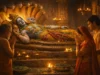
During the Kurukshetra war, Bhishma fought with absolute adherence to duty, even when bound by loyalty to a flawed cause. Struck down by Arjuna on the tenth day, he did not die immediately. Instead, he chose to wait for Magha Shukla Ashtami, when Uttarayana was underway—making his departure a conscious, spiritually elevated act rather than a forced end.
Bhishma’s Departure in the Mahabharata: Scriptural Context
According to the Mahabharata, Bhishma lay on a bed of arrows for 58 days, sustained by his yogic power and the boon of Iccha Mrityu. Hindu tradition considers Dakshinayana (the Sun’s southward movement) spiritually unfavorable for liberation, while Uttarayana (northward movement) is associated with light, ascent, and higher realms.
By choosing to depart during Uttarayana, Bhishma demonstrated supreme mastery over the body and senses. His passing was not merely death—it was Mahaprasthana, a conscious transition aligned with cosmic rhythm and dharma.
Uttarayana and Iccha Mrityu: Deep Symbolism
Uttarayana symbolizes the journey from darkness to light, from ignorance to wisdom. In the Bhagavad Gita, Lord Krishna explains that those who depart during Uttarayana attain higher spiritual realms. Bhishma’s choice reflects this Vedic principle in lived reality.
Iccha Mrityu itself is rare and profound. It represents not escape from life, but total acceptance and command over it. Bhishma used this boon not for personal gain, but to set an eternal example: that even death should occur in harmony with dharma and cosmic order.
Rituals and Observances on Bhishma Ashtami
Bhishma Ashtami is observed through reverent, inward-focused rituals rather than grand celebrations. Common practices include:
- Sacred Bath (Snan): Devotees take an early morning bath in holy rivers such as the Shipra or Ganga.
- Tarpan and Arghya: Water mixed with sesame seeds, barley, and kusha grass is offered to Bhishma while facing the Sun.
- Ekodishta Shraddha: A special ancestral rite uniquely associated with Bhishma Pitamah, performed for ancestral peace and removal of Pitru Dosha.
- Fasting (Vrat): Partial or full fasting is observed, accompanied by silence, japa, and reflection.
- Mantra Recitation: Traditional mantras honoring Bhishma are chanted during the offering of Arghya at midday.
The Madhyahna period is considered the most auspicious time for these observances.
Bhishma Ashtami 2026 Timings (Ujjain, India)
- Date: Monday, January 26, 2026
- Ashtami Tithi Begins: 11:10 PM on January 25, 2026
- Ashtami Tithi Ends: 09:17 PM on January 26, 2026
- Madhyahna Muhurta: 11:33 AM to 01:46 PM
Timings are based on local Panchang calculations for Ujjain.
Bhishma Ashtami is not merely a remembrance of death—it is a celebration of conscious living and conscious departure. Bhishma Pitamah’s life teaches that true strength lies in restraint, loyalty, and unwavering commitment to dharma. Observing Bhishma Ashtami on January 26, 2026, especially during Uttarayana, offers devotees a rare opportunity to align with these eternal values.
As we bow to the grandsire of the Mahabharata, may his example guide us toward discipline, clarity, and righteousness in every phase of life.
Frequently Asked Questions
1.What is the significance of Bhishma Ashtami?
Bhishma Ashtami honors the conscious departure of Bhishma Pitamah during Uttarayana, symbolizing liberation, dharma, and mastery over death.
2.Why is Ekodishta Shraddha performed on this day?
Ekodishta Shraddha is uniquely dedicated to Bhishma and is believed to grant ancestral peace and spiritual merit, even for those whose fathers are alive.
3.Is Bhishma Ashtami connected to Pitru Dosha?
Yes, performing rituals on this day is believed to help reduce Pitru Dosha and bring blessings related to lineage and harmony.
4.Is fasting compulsory on Bhishma Ashtami?
Fasting is recommended but not mandatory. Sincerity, remembrance, and ritual purity are considered more important.
For the latest updates on Ancient History, cultural insights, spiritual journeys, and other global events, visit mahakaltimes.com first.