

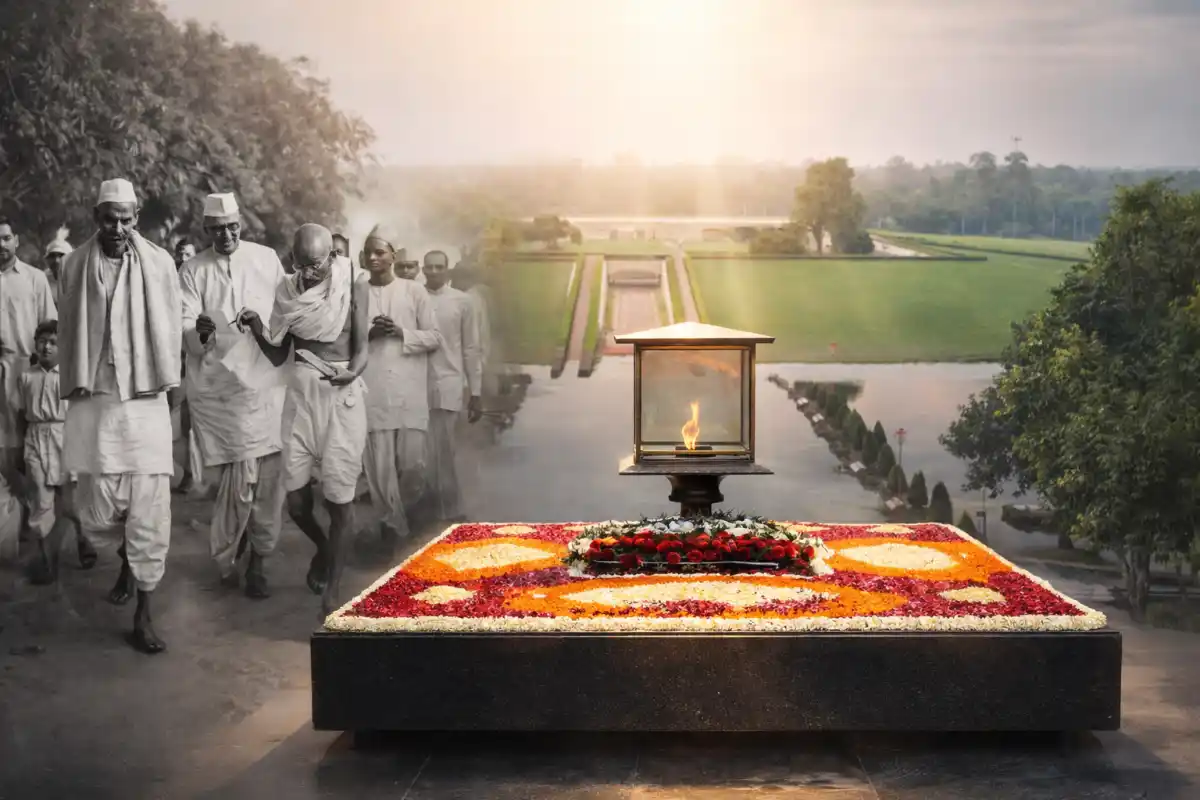
Have you ever paused to reflect on a single moment that altered the destiny of an entire nation? January 30, 1948 was one such moment. On that day, Mahatma Gandhi, the moral force behind India’s independence and the global symbol of non-violence, was assassinated in New Delhi. His martyrdom gave rise to Mahatma Gandhi Punyatithi, observed every year as Shaheed Diwas (Martyrs’ Day).
In 2026, India observes the 78th Mahatma Gandhi Punyatithi on Friday, January 30—a day of silence, remembrance, and introspection. This article explores the meaning of Gandhi Punyatithi, its historical depth, the symbolism of Shaheed Diwas, and the enduring relevance of Gandhian values in modern life.
What Is Mahatma Gandhi Punyatithi?
Mahatma Gandhi Punyatithi marks the death anniversary of Mohandas Karamchand Gandhi, revered as the Rashtrapita (Father of the Nation). Gandhi was assassinated during an evening prayer meeting at Birla House (now Gandhi Smriti) in Delhi.
Unlike birthdays that celebrate life, a punyatithi in Indian tradition is a solemn occasion—one meant for remembrance, gratitude, and moral reflection. January 30 is nationally observed as Shaheed Diwas, honoring Gandhi’s supreme sacrifice while also remembering countless martyrs who laid down their lives for India’s freedom.
In 2026, the observance once again calls upon citizens to reflect on the ideals Gandhi lived and died for: truth (satya), non-violence (ahimsa), moral courage, and self-reliance.
Historical and Philosophical Roots of Gandhi’s Legacy
Gandhi’s philosophy did not emerge in isolation. It was deeply shaped by India’s spiritual traditions and global moral thought. The Bhagavad Gita, Jain teachings on ahimsa, the Sermon on the Mount, and the writings of thinkers like Tolstoy and Thoreau all influenced his worldview.
Defining Movements Led by Gandhi
- Champaran Satyagraha (1917)
Gandhi’s first major movement in India, supporting indigo farmers against oppressive British planters. It established satyagraha as a powerful tool of resistance. - Non-Cooperation Movement (1920–1922)
Launched after the Jallianwala Bagh tragedy, it urged Indians to boycott British institutions, awakening mass political consciousness. - Namak Satyagraha – Dandi March (1930)
Gandhi’s 240-mile march from Sabarmati to Dandi to break the salt law became a global symbol of peaceful defiance against injustice.
Through these movements, Gandhi demonstrated that moral force could challenge imperial power without hatred or violence. His methods later inspired leaders such as Martin Luther King Jr. and Nelson Mandela.
Shaheed Diwas: Symbolism and National Observance
Shaheed Diwas on January 30 symbolizes the victory of conscience over cruelty and truth over tyranny. Gandhi’s assassination revealed the vulnerability of peace in a divided world, yet his final words—“Hey Ram”—reflected unwavering faith and surrender.
It is important to distinguish this day from March 23 Shaheed Diwas, which commemorates the martyrdom of Bhagat Singh, Sukhdev Thapar, and Shivaram Rajguru. While both honor sacrifice, January 30 uniquely centers on non-violence as the path to freedom.
Official Observances in India
- A two-minute silence at 11:00 AM across the nation
- Floral tributes at Raj Ghat, Gandhi’s samadhi
- Participation by the President, Vice President, Prime Minister, Defence Minister, and Service Chiefs
- Prayer meetings and remembrance events in schools and institutions
These rituals reinforce national unity and collective remembrance.
Relevance of Gandhian Ideals in Modern Life
More than seven decades after his death, Gandhi’s ideas remain strikingly relevant—perhaps even more so in a world facing conflict, inequality, and ecological crisis.
Practical Lessons from Gandhi’s Life
- Practice Ahimsa Daily
Non-violence begins with thoughts and words, fostering empathy and reducing social conflict. - Simple Living, High Thinking
Gandhi’s emphasis on minimalism and self-sufficiency promotes sustainability and mental clarity. - Satyagraha for Justice
Peaceful protest, dialogue, and ethical resistance remain powerful tools for social change. - Self-Discipline and Inner Strength
Prayer, fasting, and self-reflection cultivate resilience and moral clarity.
In 2026, revisiting these principles can guide ethical leadership, responsible citizenship, and harmonious coexistence.
The 78th Mahatma Gandhi Punyatithi 2026 is not merely a date on the calendar—it is a moral checkpoint for the nation. Gandhi’s life reminds us that true power lies in truth, compassion, and non-violence, and that lasting change begins within.
As India bows in remembrance on January 30, the greatest tribute to the Father of the Nation is to live his values every day.
Frequently Asked Questions
1.What is the exact date of Mahatma Gandhi Punyatithi in 2026?
Mahatma Gandhi Punyatithi in 2026 falls on Friday, January 30, marking the 78th anniversary of his martyrdom.
2.Why is January 30 observed as Shaheed Diwas?
January 30 commemorates Gandhi’s assassination in 1948 and honors his sacrifice, while also remembering India’s martyrs.
3.What happens at Raj Ghat on Gandhi Punyatithi?
National leaders offer floral tributes at Gandhi’s samadhi, and a two-minute silence is observed nationwide at 11 AM.
4.How is January 30 different from March 23 Shaheed Diwas?
January 30 honors Mahatma Gandhi’s martyrdom; March 23 commemorates Bhagat Singh, Sukhdev, and Rajguru.
5.Which freedom movements were led by Mahatma Gandhi?
Key movements include the Champaran Satyagraha, Non-Cooperation Movement, and the Dandi (Salt) March.
For the latest updates on Ancient History, cultural insights, spiritual journeys, and other global events, visit mahakaltimes.com first.

