

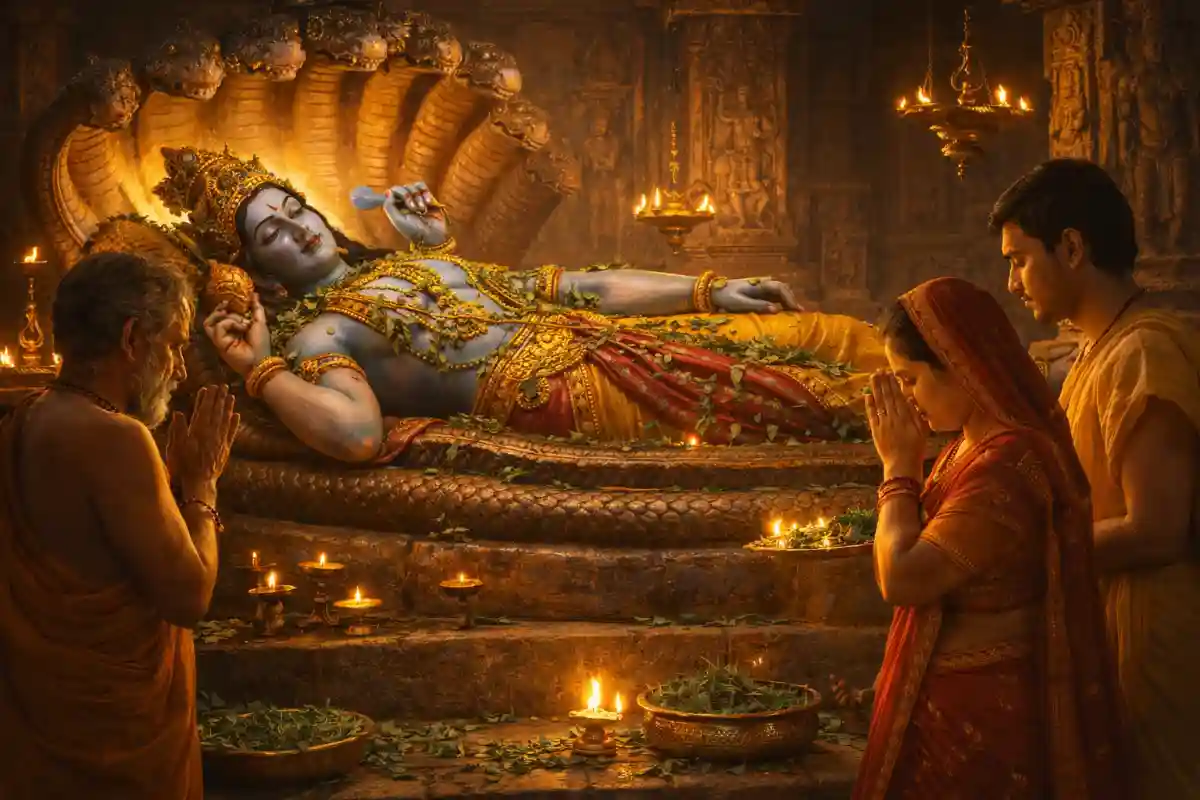
Jaya Ekadashi, one of the most powerful and spiritually transformative Ekadashis in the Hindu calendar, will be observed on Thursday, January 29, 2026. This sacred fast, dedicated to Lord Vishnu, falls during the Shukla Paksha of the Magha month and is revered for granting victory over sins, karmic obstacles, negative energies, and even liberation from ghostly or demonic states (pishacha yoni).
According to traditional belief, sincere observance of Jaya Ekadashi purifies past-life negativities, brings inner peace and prosperity, and ultimately leads the soul toward moksha. Because the Ekadashi tithi is present at sunrise on January 29, the vrat is observed on this day following the Udayatithi system.
What is Jaya Ekadashi? Meaning and Definition
Jaya Ekadashi literally means “the Ekadashi of victory.” It is the Magha Shukla Paksha Ekadashi, observed with deep devotion toward Lord Vishnu and, in Vaishnava traditions, Lord Krishna.
Ancient scriptures describe Jaya Ekadashi as a vrat capable of destroying even the gravest sins—those accumulated knowingly or unknowingly across lifetimes. It is believed to protect devotees from rebirth in lower or suffering states of existence and grant spiritual elevation.
Jaya Ekadashi 2026 Date and Timings (Ujjain Panchang)
For Ujjain, Madhya Pradesh, the traditional Panchang timings are as follows:
- Ekadashi Tithi Begins: January 28, 2026 – 04:35 PM
- Ekadashi Tithi Ends: January 29, 2026 – 01:55 PM
- Vrat Observance Day: January 29, 2026 (Thursday)
- Parana (Fast Breaking): January 30, 2026 – 07:08 AM to 09:21 AM
- Dwadashi Ends: January 30, 2026 – 11:09 AM
Since the Ekadashi tithi is active at sunrise on January 29, the vrat is observed on that day. Parana must be done within the prescribed window, avoiding Hari Vasara and Madhyahna.
Historical and Scriptural Significance of Jaya Ekadashi
The glory of Jaya Ekadashi is described in ancient Puranic texts such as the Padma Purana and Bhavishyottara Purana. In these scriptures, Lord Krishna narrates the importance of this vrat to Yudhishthira, emphasizing that its merit surpasses many other austerities.
The Magha month itself is considered highly auspicious, associated with both Vishnu and Shiva worship, making Jaya Ekadashi spiritually potent for devotees across traditions.
Spiritual Symbolism and Benefits of Jaya Ekadashi
The word “Jaya” symbolizes triumph over inner darkness, ego, and karmic bondage. Observing this vrat is believed to offer:
- Complete purification of sins from past and present lives
- Protection from negative energies, ghosts, and harmful influences
- Victory over obstacles, fear, and mental distress
- Growth in devotion, clarity of mind, and inner discipline
- Attainment of Vaikuntha and freedom from rebirth
From a practical perspective, Ekadashi fasting also aligns with lunar cycles, allowing the body and mind periodic rest from heavy digestion and sensory indulgence.
How to Observe Jaya Ekadashi Vrat: Rituals and Vidhi
Devotees should wake up early during Brahma Muhurta, take a ritual bath, and prepare a clean altar for Lord Vishnu.
Key rituals include:
- Sankalp: Taking a sacred vow to observe the vrat with sincerity
- Puja Vidhi: Offering tulsi leaves, yellow flowers, fruits, incense, lamp, and sattvic bhog
- Mantra Japa: Chanting “Om Namo Bhagavate Vasudevaya” or reciting Vishnu Sahasranama
- Fasting Rules: Avoid grains, rice, wheat, and pulses. Allowed foods include fruits, milk, nuts, sabudana, kuttu, singhara flour, and rock salt
- Night Vigil: Staying awake with bhajans, kirtans, or Ekadashi katha
- Parana: Breaking the fast on Dwadashi within the prescribed time using light sattvic food
Devotees may choose nirjala, phalahar, or water-based fasting according to health and tradition.
Jaya Ekadashi Vrat Katha: The Story of Liberation
According to sacred lore, two Gandharvas named Malyavan and Pushpavati were cursed by Indra to become pishachas due to misconduct in heaven. Condemned to wander on earth as restless spirits, they suffered intensely.
On a cold night during Magha Shukla Ekadashi, they unknowingly observed the Ekadashi vrat—remaining awake, hungry, and without food or sleep. Pleased by this accidental devotion, Lord Vishnu appeared and liberated them from their cursed existence.
They regained their divine forms and ascended back to heaven in a celestial chariot. This story demonstrates that even unintentional observance of Jaya Ekadashi can grant liberation and divine grace.
Jaya Ekadashi is not merely a fast but a spiritual opportunity to reset karma and elevate consciousness. Observing it with devotion, discipline, and faith invites Lord Vishnu’s grace, removes deep-rooted negativities, and guides the soul toward liberation.
Frequently Asked Questions
1.When is Jaya Ekadashi in 2026?
Jaya Ekadashi will be observed on Thursday, January 29, 2026.
2.What is the Parana time for Jaya Ekadashi 2026?
Parana is on January 30, 2026, from 07:08 AM to 09:21 AM.
3.Why is Jaya Ekadashi considered so powerful?
It is believed to destroy severe sins and liberate souls from pishacha yoni, granting spiritual victory.
4.What foods are allowed during Jaya Ekadashi fast?
Fruits, milk, nuts, sabudana, kuttu, singhara flour, and sendha namak are allowed.
5.Who should observe Jaya Ekadashi vrat?
All devotees of Lord Vishnu seeking purification, peace, and moksha may observe this vrat.
For the latest updates on Ancient History, cultural insights, spiritual journeys, and other global events, visit mahakaltimes.com first.

